A few weeks ago, I attended a medical conference and had an experience unlike anything I'd done before in my career. And, somewhat surprisingly, it taught me quite a bit about physician financial wellness, the importance of financial education for doctors, and the impact we can have when we share something we genuinely believe in.
Because, for the first time ever, I wasn't attending a medical conference simply as a physician or even as a speaker.
I was a vendor.
Well, sort of.
And while I wasn't entirely sure what to expect going into the experience, I left with some important lessons that extended well beyond the conference itself.
How I Ended Up on the Other Side of the Booth
As I've written about before, I've worked closely with My Financial Coach to optimize my own financial plan. Through that relationship, I've also gotten to know MFC COO Enpo Tu and founder Bill MacDonald, who share my passion for improving financial wellness among physicians.
So, when they invited me to join them at their booth during the American College of Surgeons Clinical Congress in Washington, D.C., I jumped at the opportunity.
After all, this was something I'd never done before.
I've attended plenty of medical conferences over the years. Usually, I'm there to learn about the latest advances in plastic surgery, catch up with colleagues, or give a presentation. Sometimes all three.
But I've never been on the other side of the vendor hall.
And, to be honest, I had some reservations about what that experience might be like.
If you're a physician, you know what I mean. Walking through the vendor hall at a medical conference can sometimes feel like you're a fish swimming through a pond full of baited hooks. Everywhere you turn, someone is trying to catch your attention. Maybe it's candy, a free pen, some interesting new technology, or a representative standing just outside their booth asking if you have a minute.
Most of the time, I'm simply trying to get from one place to another.
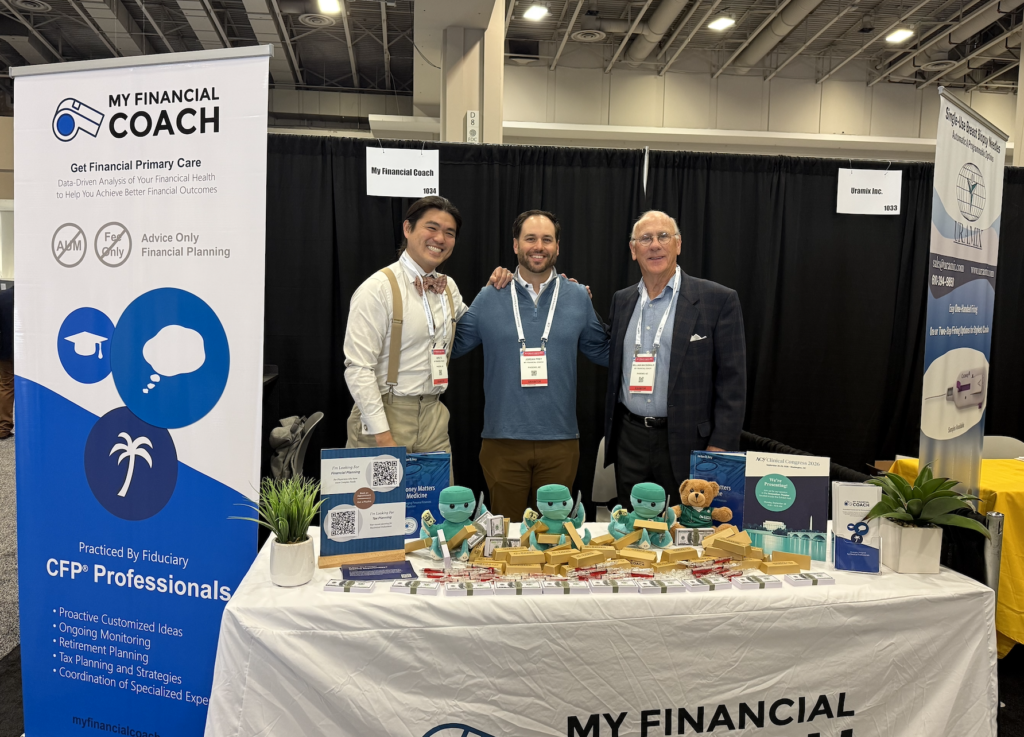
I didn't particularly want to become the person on the other side of that interaction. But I also believed deeply in what we were there to share. And that distinction turned out to be incredibly important.
Lesson #1: You Don't Have to Chase People to Make an Impact
Our booth was divided into two sections. One featured The Prudent Plastic Surgeon, including copies of my books and information about the financial education resources I've created. The other focused on My Financial Coach and the services they offer.
There were brochures, informational materials, and yes, even candy and branded stuffed animals. So we weren't entirely above the traditional vendor hall experience!
But what struck me almost immediately was how differently Enpo and Bill approached the whole thing.
All around us, representatives were standing outside their booths, trying to engage people walking past. Some were quite aggressive about it. Meanwhile, we mostly just stayed inside our booth. We didn't try to pull anyone in. There wasn't a big sales pitch or some elaborate marketing gimmick designed to attract attention. Instead, we simply made ourselves available.
At first, I wondered whether this was really the best strategy. After all, wasn't the point of being there to reach as many people as possible?
But Enpo and Bill explained their philosophy, and it made a tremendous amount of sense.
Essentially, they weren't interested in convincing people who weren't ready to engage with their finances. Certainly, they were happy to educate anyone who wanted to learn. However, if someone didn't recognize the importance of financial wellness or wasn't ready to take action, pushing them wasn't going to accomplish much.
Instead, they focused on being available to people who were genuinely interested.
And you know what?
It worked.
Throughout the conference, physicians and other attendees approached us voluntarily. Some openly admitted that they needed help with their finances. Others recognized that they weren't paying enough attention to their financial situation or had been putting off creating a plan.
These weren't people we had to convince that financial wellness mattered. They already knew. They just needed help figuring out what to do next. That experience reinforced something I've come to believe more strongly as I've built The Prudent Plastic Surgeon.
When you're sharing something that provides genuine value, you don't necessarily have to chase people down to make an impact.
Sometimes the most effective thing you can do is make yourself available, explain what you offer, and let people come to you when they're ready.

- My Financial Coach specializes in working with physicians and medical professionals, who make up 87% of their client base.
- Each client works with a dedicated CFP® professional to build and monitor a comprehensive financial plan across retirement, taxes, debt, insurance, benefits, estate planning, and other major financial decisions.
- Their platform brings accounts, investments, benefits, insurance, real estate, and important financial documents together in one place so physicians can identify gaps and see how the pieces of their financial life fit together.
Lesson #2: Physician Financial Wellness Is Still a Huge Unmet Need
One of the most striking aspects of the experience was just how many physicians approached us and acknowledged that their finances needed attention.
Now, this wasn't exactly a scientific survey. The people approaching a financial wellness booth were obviously more likely to have an interest in the topic. Still, the conversations were revealing. These were highly educated, accomplished professionals who had spent years developing the knowledge and skills necessary to care for their patients.
Yet many felt uncertain about how to manage their own money.
And that's something I've talked about for years.
Physicians spend an extraordinary amount of time learning how to practice medicine. Unfortunately, we receive almost no formal education about how to manage the substantial financial decisions that accompany our careers.
We graduate with enormous earning potential, but often with equally enormous student debt and very little understanding of investing, insurance, taxes, or retirement planning.
Then we're expected to figure everything out on our own. It's a recipe for unnecessary stress and financial mistakes. That's why I believe so strongly in the importance of creating a written financial plan and developing financial literacy early in our careers.
In fact, I've even put together an entire DIY financial literacy curriculum for physicians to help doctors get started.
And it's also why I believe physician financial wellness is about much more than money
When doctors feel financially secure, they gain greater control over their careers and lives. They can make decisions based on what's best for their patients, their families, and themselves rather than simply what maximizes their next paycheck.
As I've discussed in my post on how financial freedom can decrease physician burnout and make us better doctors, the benefits of financial wellness extend far beyond our bank accounts.
Financial independence creates options. And those options can make us better, happier, and more fulfilled physicians.
Seeing so many doctors recognize that connection was incredibly encouraging.
Lesson #3: Authenticity Is More Powerful Than a Sales Pitch
On the second day, Enpo and I gave a presentation in the vendor hall.
Now, presentations in vendor halls can be hit or miss. People are wandering around, talking with representatives, looking at exhibits, and generally doing a million different things.
In fact, we had some particularly stiff competition. At roughly the same time, another area of the vendor hall had brought in a bunch of puppies for attendees to interact with as a way to relieve stress. So we were essentially competing against puppies. Not exactly an ideal matchup.
Nevertheless, we ended up with a nearly full audience
Our presentation, officially titled Inside a Physician's Finances: Real Numbers, Real Decisions, and Financial Lessons for Physicians, focused on something pretty straightforward: my own personal financial plan and the current state of my finances.
I've always tried to be transparent about my financial journey, including where I started, the mistakes I've made, the strategies I've implemented, and the progress we've achieved.
This presentation was no different. Rather than simply discussing hypothetical financial strategies, we showed how those concepts have played out in my actual life. And I think that's why the presentation resonated.
It's one thing to tell physicians that they should save more, invest consistently, or develop a financial plan. It's another to show them how someone in a similar position has actually done those things, including the challenges and imperfections along the way.
I've shared before how I finished training with a negative net worth of more than $500,000, largely due to student loans. Since then, my wife and I have worked to turn our financial situation around through consistent saving, investing, real estate, and intentional financial planning.
That journey hasn't been perfect. But it's real.
In fact, I've shared my actual written financial plan publicly so other physicians can see exactly how we approach our finances and use it as a starting point for their own.
I think people connect with real experiences far more than polished sales presentations. The feedback after our talk was fantastic, and it led to some really meaningful conversations. Apparently, financial transparency can compete with puppies after all.
Lesson #4: Sometimes You Need to Step Away From the Screen to See Your Impact
One of the coolest parts of the entire medical conference was something I hadn't really anticipated.
Several people came up to the booth because they recognized The Prudent Plastic Surgeon. Some mentioned reading the blog. Others had followed my content online and wanted to introduce themselves. And I have to say, those interactions meant a lot to me.
Much of the work I do with The Prudent Plastic Surgeon happens behind a computer screen. I write blog posts, record podcasts, create educational content, and send it out into the world.
Of course, I can look at website traffic, email subscribers, and other metrics to get a sense of how many people I'm reaching.
But numbers only tell part of the story
They don't tell you whether something you wrote helped a physician feel less anxious about money. They don't show whether someone finally started investing, negotiated a better contract, or decided to take control of their finances after reading one of your posts.
And they certainly don't capture the personal connection that comes from someone walking up to you and saying they've been following your work.
Those are the moments that remind me why I started this whole thing in the first place.
It wasn't to build a website or accumulate followers.
It was to help other physicians avoid some of the financial mistakes I made and hopefully improve their lives in the process.
I've written before about how physician finances are more like a marathon than a sprint. And I think the same analogy applies to building something meaningful outside of medicine.
You keep showing up, doing the work, and trusting that your efforts will eventually make a difference. Getting to see even a small piece of that impact firsthand was incredibly rewarding. It also reinforced an important lesson that extends beyond financial education. Sometimes, when you're deeply involved in building something, you become so focused on the day-to-day work that you lose sight of the bigger picture.
Taking a moment to step outside that routine can remind you that the work actually matters.
- My Financial Coach specializes in working with physicians and medical professionals, who make up 87% of their client base.
- Each client works with a dedicated CFP® professional to build and monitor a comprehensive financial plan across retirement, taxes, debt, insurance, benefits, estate planning, and other major financial decisions.
- Their platform brings accounts, investments, benefits, insurance, real estate, and important financial documents together in one place so physicians can identify gaps and see how the pieces of their financial life fit together.
Lesson #5: The Best Connections Often Have Nothing to Do With Business
Another unexpected benefit of this particular medical conference was getting to spend more time with Enpo and Bill.
We'd worked together before, but there's something different about spending a few days together in person. Between our time at the booth and dinners in the evening, I got to know them much better on a personal level.
And some of my favorite conversations had absolutely nothing to do with financial planning. For example, I learned that Bill is a huge baseball fan, which obviously gave us plenty to talk about. He shared stories about becoming personal friends with the legendary Chicago Cubs player Ernie Banks. Their friendship even helped Bill with his business and with organizing a fantasy baseball camp for himself and his friends.
As someone who loves baseball and now spends a significant amount of my free time coaching youth baseball, I thought that was incredibly cool.
But beyond the baseball stories, those conversations reminded me how valuable it is to build genuine relationships with the people you work with.
We spend so much time thinking about networking in terms of professional opportunities, referrals, and business development. Those things certainly have value, but sometimes the most rewarding part is simply getting to know interesting people.
And the strongest professional relationships often develop naturally from those personal connections.
Lesson #6: There Is Value in Stepping Outside Your Usual Role
Of course, I did still get to enjoy some of the more traditional aspects of the medical conference.
There were interesting sessions on abdominal wall reconstruction, breast reconstruction, and other topics related to my clinical practice. I always enjoy hearing how other surgeons approach problems and learning about advances outside my immediate area of expertise.
One particularly memorable experience was hearing Supreme Court Justice Ketanji Brown Jackson speak during a moderated discussion.
I hadn't realized before the conference that her husband is a surgeon. Hearing about how they navigated their demanding professional training while raising young children was fascinating. Her discussion also touched on leadership, resilience, and working with people who have different perspectives. It was a reminder that many of the challenges we face as physicians aren't necessarily unique to medicine.
The American College of Surgeons' coverage of her presentation provides an interesting summary of the discussion.
But perhaps the biggest takeaway for me was how much I enjoyed doing something completely different.
Most of my professional life revolves around being a plastic surgeon. Even when I attend conferences, my role is generally familiar. This time, I was representing something I'd built outside of medicine while simultaneously trying to improve the lives of people within medicine. It was a unique intersection of my two professional worlds.
And it reminded me that stepping outside our usual routines and roles can provide perspectives we otherwise might never experience.
Lesson #7: Doctors Really Love A Stuffed Octopus
This was the honest to goodness biggest shock of the whole medical conference. As part of the minimal branded swag that MFC brought to the conference were these small stuffed octopi with a surgeon's gown and mask on, holding a felt scalpel in one tentacle.
And people…doctors, surgeons…freaked out. It was a viral hit throughout the vendor hall. Dozens of people coming up to the booth shamelessly asking if they could grab one for themselves or their kids.
I even saw an attendee come in and swipe one when we were all engaged in conversation with other attendees.
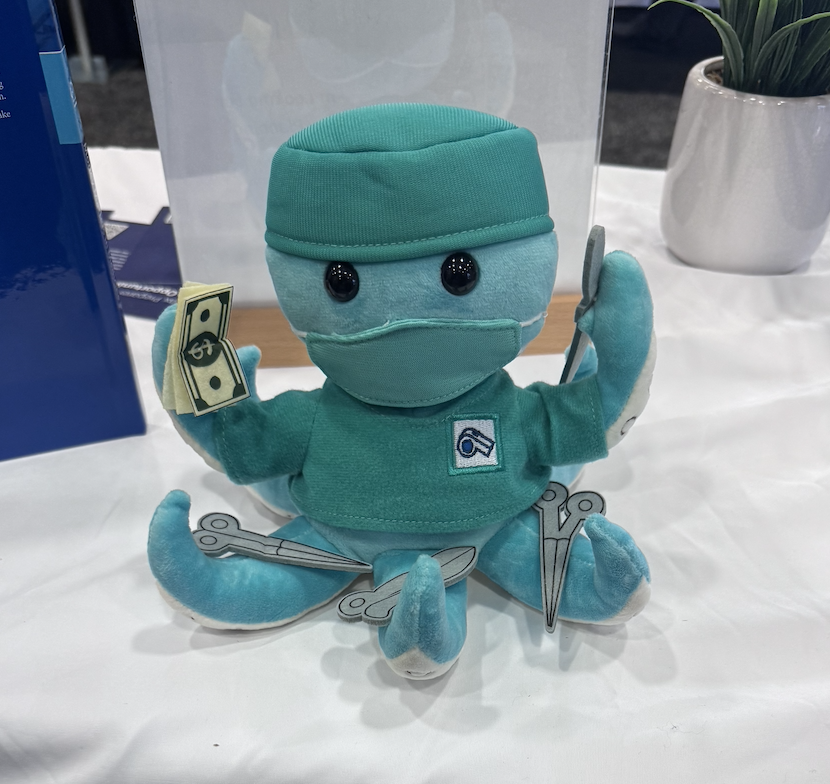
It was wild. Don't get me wrong, they were super cute. But still…wow.
Final Thoughts: Why This Experience Meant So Much to Me
When I first started The Prudent Plastic Surgeon, I had no idea where it would lead.
I simply wanted to share my financial journey and hopefully help other physicians learn from my experiences. Over time, that grew into a blog, podcast, books, partnerships, and opportunities that I never could have anticipated.
Standing in a vendor booth at the American College of Surgeons conference certainly wasn't something I envisioned when I started.
But I'm really glad it happened.
I learned that you don't have to be aggressive to share something valuable. I saw firsthand how many physicians are looking for help with their financial wellness. And I was reminded that authenticity, transparency, and genuine relationships are far more powerful than any marketing gimmick.
Most importantly, I got to connect with people who have been impacted by the work I'm doing.
And that was the best part of the whole experience
As physicians, we're fortunate to have careers that allow us to make a meaningful difference in people's lives. But I've increasingly come to appreciate that the impact we have doesn't need to be limited to what happens in the operating room or clinic.
Sometimes, it happens through a conversation, a blog post, or even a few days spent standing in a vendor booth at a medical conference.
And if that helps another physician take control of their finances, reduce their stress, or build a more fulfilling life, then it's absolutely worth it.
Even if I have to compete with puppies to make it happen.
What do you think? Have you ever attended a medical conference in a completely different role than usual? What have you learned by stepping outside your professional comfort zone? And do you think a medical conference should place a greater emphasis on physician financial wellness and other aspects of life outside of medicine? Let me know in the comments below!