One of the things I love most about coaching youth baseball is that every once in a while the kids end up teaching me something that has nothing to do with baseball. Earlier this summer, that happened again when I learned something new about success and when it stops being fun.
Our 8U travel baseball team had put together a tremendous season. From the very first indoor practices in the winter through the heart of summer, these kids had worked incredibly hard. They had improved in every aspect of the game, learned how to play together, and established themselves as one of the best teams in our area. We won a lot of games and, to be honest, many of them weren't particularly close.
As coaches, we were proud of much more than the wins. We loved watching the kids celebrate each other's success, cheer from the dugout, and genuinely enjoy being around one another. Winning was certainly fun, but it felt like a byproduct of doing all the little things well.
Somewhere along the way, though, something changed.
It wasn't obvious at the time. Looking back, I don't think anyone consciously noticed it happening. But after enough success, we slowly stopped hoping to win and started expecting to win.
That subtle shift ended up teaching me a lesson I'll probably remember far longer than any tournament trophy.
A Different Kind of Loss
One of the biggest tournaments of our season featured 32 teams from around the region. We played excellent baseball during pool play, finished undefeated, and earned the No. 3 seed heading into bracket play.
Our first elimination game was against a team we had already beaten three different times that season. If you had asked anyone beforehand, they probably would have predicted another comfortable win. Instead, we lost by one run.
The game itself wasn't all that remarkable. We simply didn't have the big inning that had bailed us out so many times during the season. Credit belongs to the other team. They played well, made the routine plays, and deserved to win.
What interested me wasn't the final score. It was what happened afterward.
The kids were disappointed, as they should have been. They care. That's one of the things that makes coaching them so enjoyable. But within an hour they were laughing again, chasing each other at an impromptu pool party, and acting like eight-year-olds.
However, as I reflected on the weekend, I realized that for the first time all season, doubt had entered the picture. We had built up this expectation that we were supposed to win every game. Losing didn't just hurt because we lost. It challenged the story we had quietly started telling ourselves about who we were.
Maybe we weren't as good as we thought.
When Doubt Shows Up
The following weekend we entered another tournament.
Our first opponent was a team we had beaten 19-0 earlier in the season. On paper, nothing suggested this game should be difficult. But baseball isn't played on paper.
They came out loose, aggressive, and excited. They knew exactly who they were playing and wanted to prove themselves. We looked tight from the very first inning.
Routine ground balls suddenly weren't routine anymore. At-bats became tentative. One mistake quickly turned into another. Instead of attacking the game the way we had all season, it felt like we were trying to avoid making the mistake that would cost us another loss.
While our opponents were playing better than they had months earlier, I think this was more about the fact that we were playing worse. Not because we had forgotten how to play baseball. Because we had become consumed by our own expectations.
Success had quietly stopped being fun. Instead of playing to enjoy the game, we were playing to protect our reputation.
That's a dangerous place to be.

Hitting the Reset Button
Before our next game, I realized we needed something completely different.
The kids didn't need another lecture about mechanics. They already knew what to do. They didn't need another reminder about where to throw the baseball or how to field a ground ball.
What they needed was to remember why they loved playing in the first place. We didn't talk about winning. Instead, we talked about what our job actually was.
Our job was to hustle. To cheer for our teammates. To attack the baseball instead of waiting for it. To take confident swings. To keep smiling after mistakes because every baseball player makes them. To focus only on the things we could actually control.
Then we threw our normal warm-up out the window.
Instead of another round of technical drills, we held a coaches' relay race followed by an impromptu Wiffle ball home run derby.
For the first time in two weeks, the dugout sounded like itself again. There was laughter. There was friendly trash talk. And there was energy. Most importantly, there wasn't pressure.
The Lesson Was Never About Baseball
The difference once the game started was remarkable.
The kids played free again. We stopped worrying about success and instead focused on fun.
They made mistakes, because baseball guarantees mistakes. But this time those mistakes didn't snowball. Someone booted a ground ball, and another teammate immediately picked him up. Someone struck out, and five seconds later he was cheering for the next hitter.
By the end of the weekend, we had won our bracket. The following tournament ended with another trophy.
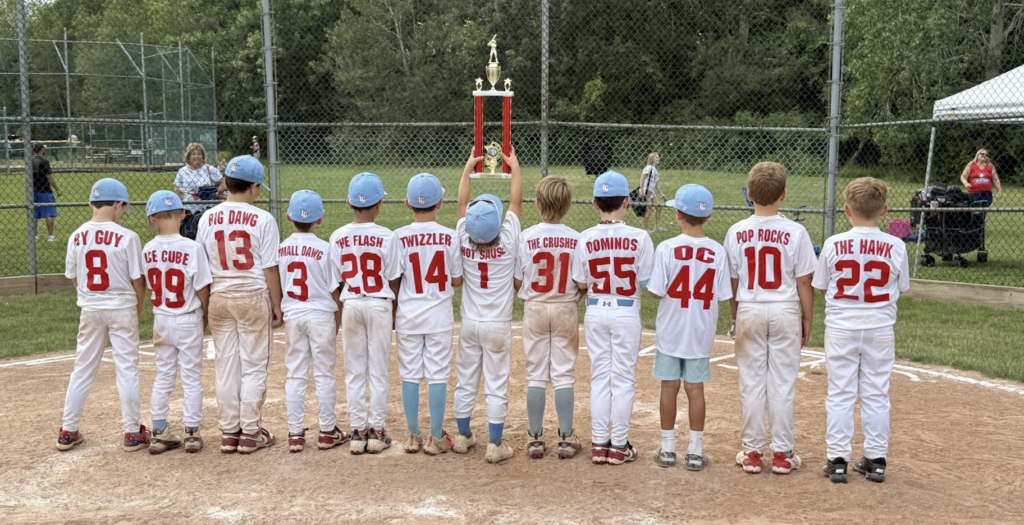
Did a relay race suddenly make us a better baseball team? Of course not. The talent hadn't changed. The kids hadn't suddenly learned some magical new baseball skill. What changed was their perspective.
As I drove home afterward, I realized how often I've done exactly the same thing in my own life.
I've done it in surgery, where good outcomes quietly become expectations instead of privileges. I've done it with writing, where creating something meaningful slowly gets replaced by worrying how many people will read it. And I've done it with investing, where financial milestones become moving targets instead of moments to appreciate.
It's remarkably easy to let outcomes become the reason we show up each day
The problem is that outcomes are fleeting.
You celebrate the promotion, the successful operation, the financial milestone, or the championship for a little while, and then your mind immediately moves on to the next one.
The process is different. The process never ends. That's where the relationships are built. That's where improvement happens. And that's where the enjoyment lives if we allow it to.
Sometimes we need a reminder that the things we love were never supposed to become obligations.
They were supposed to stay fun with success as a possible, but not guaranteed outcome.
Ironically, I've found that's usually when we perform our best anyway.
So whether you're building a practice, growing your investments, raising kids, coaching a baseball team, or simply trying to become a little better than you were yesterday, it might be worth asking yourself a simple question.
Are you still enjoying the process? Or have you become so focused on the outcome that you've forgotten why you started playing the game in the first place?
Because if a group of eight-year-olds reminded me of anything over the summer, it's that sometimes the fastest way to get back to winning is to stop worrying so much about winning at all.
What do you think? How has your view of success changed throughout your life? And how has that view of success impacted the fun you have as a result? Are you focusing on the outcome or the process? Let me know in the comments below!