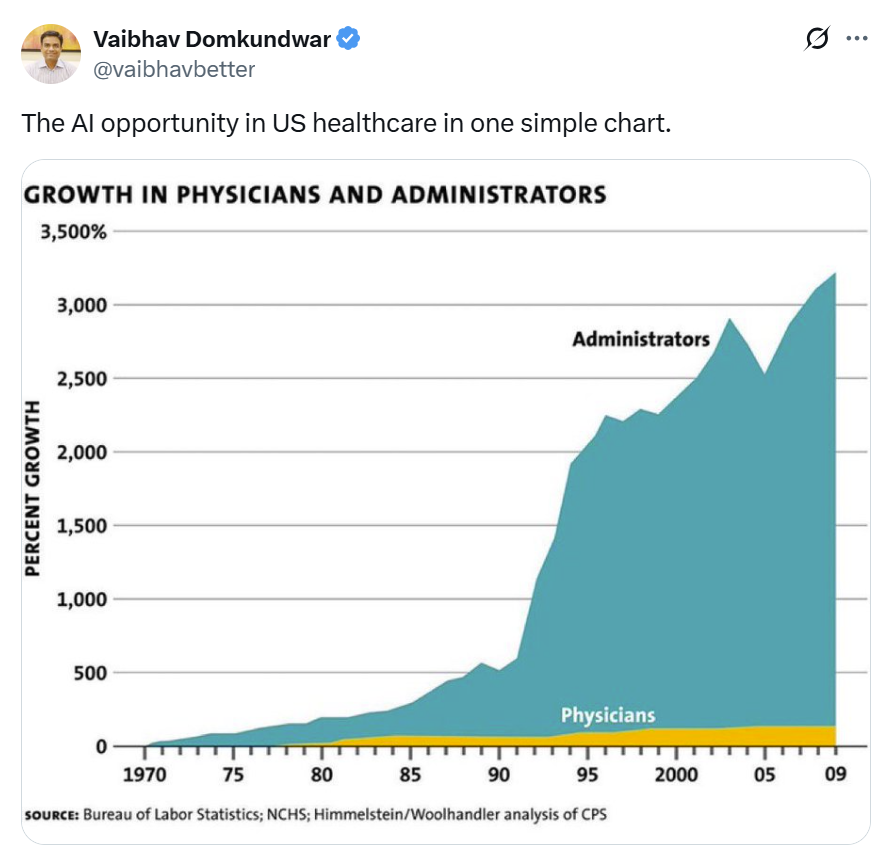
1) Medicare Pays Physicians One-Third Less Than a Decade Ago
Read: Forbes; Study: Medicare Pays Physicians One-Third Less Than a Decade Ago (Aug 26, 2025)

PPS take: This squeeze is undeniable, if not unsurprising. Medicare reimbursements are down 33.6% in real terms over the past decade, while practice costs (staffing, rent, supplies) are up nearly 30%. Meanwhile, Medicare Advantage often pays 10–15% less than traditional Medicare. This means that practices caring for disproportionately more patients with greater need (elderly patients) are hit hardest. Unfortunately, things look like they will only get worse as the HHS looks to take over the task of setting CMS rates from the AMA.
Do this now:
- Model future revenue projections based on future rate cuts
- Diversify your payer mix: explore commercial payors, elective services, or direct-pay models
- Engage in advocacy; these changes directly threaten practice sustainability!
2) Stagflation Risk Mounts—But It Might Be Milder This Time
Read: Investopedia; The Economy Is Headed for Stagflation. But This Time It’s Different (Aug 2025)

PPS take: Experts are warning of a “stagflation-lite” scenario; inflation remains high while growth slows. For better or worse, these same experts don’t expect it to be as bad as stagflation in the 1970s. But either way, there is a chance we could be facing a period of some time with higher costs and a reduced economy before either inflation soars or the economy grows. For physicians, that means rising operational and living costs without a matching increase in revenue for this time period.
Do this now:
- Prioritize essential expenses and suspend non-critical spending
- Build flexible forecasts anticipating inflation and slow growth
- Focus on paying down fixed-rate debt to preserve practice and personal cash flow
3) AI Bubble Fears Grow as Investors Question ROI
Read: The Week; The AI Bubble and a Potential Stock Market Crash (Aug 2025)

PPS take: A recent MIT study shows that 95% of companies investing in AI measures fail to deliver a return on that investment. The result: amplifying fears of rampant speculation on AI stocks that could result in a bubble not unlike the dotcom bubble of the 2000s. For doctors this means a couple things: (1) while AI presents many unique opportunities for implementation in clinical practice, practice caution before investing a ton of money into it at this time and (2) be careful overweighting your personal investment portfolio in AI stocks.
Do this now:
- If tech/AI exposure exceeds ~20% of your portfolio, strongly consider reshaping your portfolio into a more reasonable allocation of index funds (which still include AI stocks but in a balanced fashion)
- Stick to long-term discipline. Don’t chase the hype on any one sector now or at any time
- Utilize easy access AI tools in your practice like those offered by Doximity rather than investing significant money into start up tech of uncertain utility or ROI
4) Bond Markets Bristle at Political Moves, Hinting at Fiscal Dominance Risk
Read: Reuters; Trump’s effort to remove Fed governor set to test Treasury market (Aug 26, 2025)

PPS take: President Trump’s attempt to remove Fed Governor Lisa Cook has created some uncertainty in the bond market. Why? Because when interest rates fall, bond rates rise as older, higher rate bonds become more attractive than more recently issued bonds with lower rates. And it’s obvious that Trump is pushing for an easing of interest rates by asserting dominance over the Fed. Markets responded to this news with a slight curve steepening: short-term yields slipped while long-term yields inched higher. This reflects a growing concern about “fiscal dominance,” where keeping government financing cheap eclipses the fight against inflation.The problem with this? Ultimately it will push up long term borrowing costs, which is especially painful for physician practices relying on rate-based financing or stable liquidity.
Do this now:
- If considering refinancing or locking in loans, take advantage of reasonable rates now. Don't keep waiting for any failing rates to get lower and lower; they are probably more likely to rise long term
- Maintain a tactical cash buffer
- Keep a balanced investment approach: consider inflation-protected instruments like TIPS or short-duration bonds with less sensitivity to political shocks
Your Turn
What finance topics should we break down next week? Reply with your suggestions!
Bonus) A Tweet from the Week!