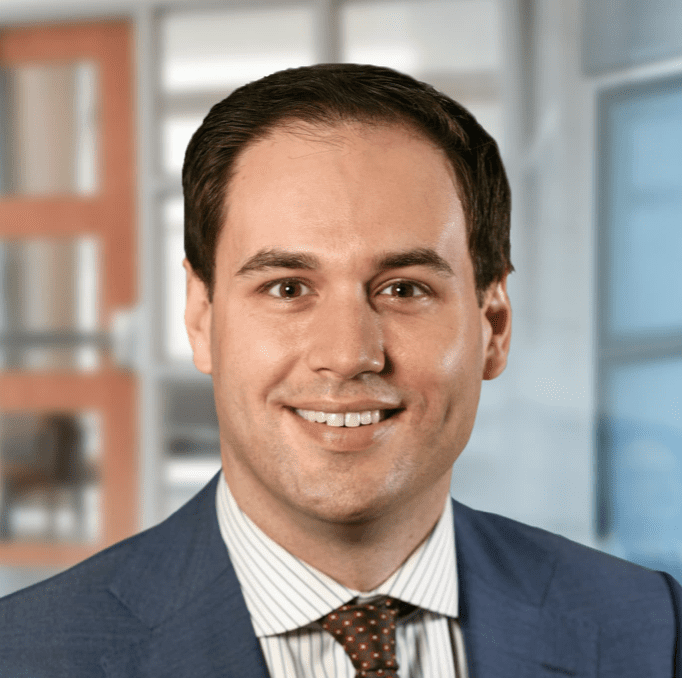
I thought it would be fun on here to go through some of the surgical cases that I do in my work as a plastic surgeon. Because I love it. And probably the best and least biased way of doing that is to just review my last 7 surgical cases!
Why 7? No clue. Seemed like a good number!

- I work with Cerebral myself because they are the first tax advisors who did more than file a return for me. They built a real plan that lowered what I owe every single year.
- They have a 2x ROI guarantee that is straightforward. If they cannot save you at least twice what you pay for your tax plan, they give the plan to you for free.
- I recently hosted a live webinar with Cerebral Tax Advisors on the Top 5 OBBBA tax changes that actually matter for high-earning physicians .
- They handle everything for me from building the strategy to putting it into place, which makes the savings easy and keeps the work completely off my plate.
The mile high view
As a brief reminder or background, I work as a plastic surgeon. Within plastic surgery, I am further trained as a microsurgeon. The majority of my practice focuses on breast reconstruction after cancer. Specifically, autologous breast reconstruction using a patient's own tissue. And you can learn more about this and other types of microsurgery right here.

However, the majority of the breadth and depth of plastic surgery is represented in my surgical cases.
How I got here
To become a plastic surgeon and microsurgeon, I completed:
- 4 years of undergraduate studies at Emory University
- 4 years of medical school at the University of Rochester
- 6 years of plastic surgery training at NYU (which I am proud to say is the #1 plastic surgery residency in the world)
- 1 year of microsurgery fellowship at NYU
So a lot of time and a lot of work, but it all has been well worth it! And with that, let's get into it…
My last 7 surgical cases
We are going from most recent to least recent here…
1. Abdominoplasty and thigh lift
This was a patient who lost a ton of weight via bariatric surgery…over 100 pounds! She had significant excess skin all over. I had previously done a circumferential body lift where I removed the excess skin around the front of the abdomen and back.
Now, she still had excess skin in the vertical dimension of her abdomen and of her medial thighs. SO, in this surgery, I removed that excess skin and closed things carefully so it healed nicely.
2. Bilateral breast reconstruction with immediate implants and neurotization
This surgery was for a young patient with a left breast cancer who elected to proceed with bilateral or double mastectomy.
The patient elected to undergo reconstruction with implants, which can generally be done in one or two stages. Thankfully I work with an amazing breast surgeon who was able to perform the mastectomy and save the nipples in a way that allows me to do the reconstruction in one stage.
Maintaining sensation after the reconstruction was very important to this patient so I performed nerve grafting from the 4th intercostal nerve branch to a nerve under the nipple to do so! However, it will take months and up to a year for sensation to come back.
3. Left breast reconstruction with immediate implant and neurotization
Similar to the above case except this patient elected only to have the affected left breast removed. However, again in coordination with the same breast surgeon, we were able to save the nipple, complete the reconstruction in one stage, and restore sensation…all in one surgery.
4. Fat grafting to the right heel
This was a pretty interesting one. It was a gentleman who over a year ago fell through his roof and sustained a horrible right ankle fracture with complete loss of the soft tissue of his heel such that the bone was exposed. I performed a series of reconstructions and was able to restore the soft tissue while orthopedic surgeons fixed his ankle. All in all it saved him from an amputation.
Now, he was walking well but still had some pain and discomfort in his right heel which, while covered, lacked some padding. So, I took some fat from his abdomen via liposuction and injected it under the reconstructed skin of his heel to provide more padding. After 6 weeks without putting pressure on it, hopefully he will be able to walk even more comfortably!
5. Bilateral revision of breast reconstruction
This was a woman who had breast cancer and underwent a bilateral mastectomy and two stage implant placement by another surgeon. She came to me because she wasn't happy with the reconstruction. The implants were ultimately placed under her chest muscle which was bothersome and she had a deformity called synmastia, where the breasts coalesce into one in the middle…essentially a uni-boob.
In the surgery, I removed the old implants along with some scar tissue, reconstructed the pectorals muscle and created a pocket to place new, better fitting implants over the muscle. I then did some fat grafting to the cleavage area to enhance the result.
6. Lower extremity liposuction for lipedema
Right now, I am the only surgeon in my area treating lymphedema and its less well studied cousin, lipedema which results in abnormal fat deposition in usually the legs.
This was a patient with lipedema of both legs. So, I performed liposuction debulking of both legs removing 5 liters of fluid and fat!
7. Reverse radial forearm flap for coverage of an elbow wound
This was a gentleman who had right elbow bursitis. It got so bad that the orthopedic surgeon had to debride it multiple times, removing soft tissue. This left him with a wound around his elbow with exposed bone and tendon. Without stable soft tissue coverage, arm amputation would be inevitable.
I took him to the operating room and performed a reverse radial forearm flap where I take a patch of skin and soft tissue from the volar wrist area connected to the radial artery and vein. This tissue then gets transposed (still connected to the blood vessels) to cover the elbow defect and the donor site (the wrist) gets reconstructed with a split thickness skin graft from the thigh.
This is why I love plastic surgery!
I don't think that is a more rewarding and fulfilling specialty out there. Of course, there is some bias. But I really love what I do and being able to help patients in this manner. It fits me perfectly.
I hope these surgical cases illustrate why I feel this way.
But, even with this, I still experienced burnout. Even before I finished training. That demonstrates just how powerful the multifactorial forces behind burnout and moral injury are. We get to do some amazing things to help people in profound ways. But yet burnout is rampant with over 60% of physicians reporting symptoms.
In my case, a lack of financial well-being was the culprit (and ultimately the impetus to start this blog!)
So, I encourage you to remember and hold tight the things that you do love about medicine. And remember that financial freedom (and an overall focus on personal well-being) can help alleviate burnout, help you become a better doctor, as well as live life and practice medicine on your own terms!
What do you think? What does your day in clinical or non-clinical medicine look like? Do you enjoy it? Why or why not? Let me know in the comments below!