I came across an article recently asking a simple but provocative question: Have investors forgotten how to panic? It made me chuckle at first, but the more I thought about it, the more I realized it is actually a fair question.
Just a few weeks ago, I wrote about preparing for the next bear market. I do not have a crystal ball, but the setup felt familiar. Global unrest was building, valuations looked stretched, and the market seemed increasingly dependent on a small group of AI-driven companies. If you have followed markets for any length of time, you have seen this pattern before.
And yet, here we are.

Time is money in medicine. AI only matters if it actually gives you that time back. That’s why I use DoxGPT. Quick drug checks, clinical questions, administration tasks, all done in under a minute.
Your time is worth hundreds of dollars an hour. Stop wasting it on tools you can't trust. DoxGPT helps you get that time back without sacrificing quality.
The market has been relatively stable. Just moving along in a way that feels almost uneventful except for the fact that the S&P 500 just recently crossed 7,000 for an all time high. But overall it's been a little up here, a little down there. Nothing that resembles the kind of volatility many expected.
What makes this particularly interesting is that there has been no shortage of reasons for the market to react. Geopolitical tensions have remained elevated, including uncertainty surrounding Iran and the potential for renewed conflict. At the same time, major corporate changes, such as leadership transitions at companies like Apple, would typically introduce some degree of volatility.
Layer on top of that the ongoing debate around AI. Depending on the day, it is either the greatest economic accelerator we have seen in decades or a looming threat to jobs and entire industries. The market’s reliance on a handful of companies driving this narrative only adds to the perceived risk.
If you were looking for catalysts for a downturn, you could easily find them. But the market has largely shrugged all of it off.
The Strength of Staying Invested
If nothing else, this moment reinforces one of the most important principles in investing: staying invested matters more than being right in the short term. There were plenty of reasons to expect a dip recently, and I will be the first to admit that I would have bet on it. And I would have been wrong.
That is the point.
Trying to anticipate short-term movements in the market is a losing game more often than not. If you had pulled money out of the market in anticipation of a downturn, you would not have preserved value. You would have missed out on gains. That is an active decision with real consequences.
Meanwhile, a consistent investment approach tells a very different story. If you are investing in the overall market regularly, you benefit regardless of what the market does in the short term. When prices dip, you are buying at a discount. When they rise, your portfolio grows. Over time, that steady approach compounds in a way that reactive decision-making simply cannot match.
It is not exciting, but it is effective.
So again, the question becomes: have investors forgotten how to panic?
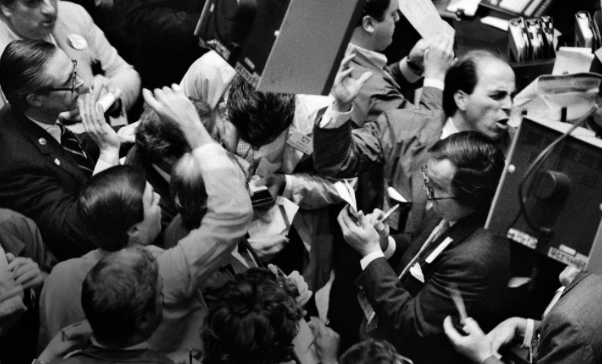
Let's look at some potential explanations for the current market:
1. A More Desensitized Investor?
There is a behavioral component that is hard to ignore. Over the past few decades, investors have experienced a steady stream of major events. Financial crises, wars, corporate scandals, and even a global pandemic have all tested the market.
Each time, the market has recovered and gone on to reach new highs.
That kind of repeated experience changes how people react. Events that once would have triggered panic now feel more routine. The constant noise of the news cycle, with its rapid swings between optimism and fear, may actually be pushing investors to zoom out rather than react to every headline.
In that sense, investors may not have forgotten how to panic. They may simply have become more selective about when panic feels warranted.
2. The Role of Index Fund Investing
Another important factor is the rise of index fund investing (my favorite index funds listed here). This approach has grown dramatically in popularity, and for good reason. It simplifies investing by removing the need to pick individual stocks or time the market while consistently outperforming active investing strategies that rely on timing the market and stock picking.
When you invest in index funds, you are buying into the broader economy. You are betting on long-term growth, innovation, and productivity. And you are doing so with the understanding that short-term fluctuations are part of the process.
As more investors adopt this strategy, the market may become somewhat less reactive to short-term news. There is simply less trading based on emotion and more capital that remains consistently invested.
This does not eliminate downturns, but it may reduce the intensity of day-to-day volatility.
3. Or Maybe the Panic Just Hasn’t Started Yet
Of course, there is another possibility worth considering. Investors have not forgotten how to panic. They just are not ready to panic yet.
This idea connects to the “castles in the air” theory of investing, which suggests that value is often driven by what people believe something is worth rather than purely by fundamentals. History has shown us time and again that markets can sustain elevated valuations as long as that belief remains intact.
We have seen this with tulips, with early internet companies, and with various speculative bubbles throughout history. In each case, the underlying belief persisted until it suddenly did not.
It is possible that we are in a similar phase now. Despite concerns about valuation or concentration, investors may still believe strongly in the current market, particularly in the growth potential of technology and AI.
As long as that belief holds, the market can remain resilient. But when it shifts, the reaction can be swift.
Cognitive load builds in the small moments. DoxGPT reduces it.
Built for real clinical work. It pulls from 750+ peer reviewed journals and 200+ medical guidelines updated daily so every answer comes with sources you can actually verify.
DoxGPT reduces decision fatigue without lowering your standards, so you can think clearly even at the end of a long day.
What Should You Do as an Investor?
This is the part that actually matters. While it is interesting to analyze market behavior, it does not change a fundamental truth: we cannot reliably predict what the market will do next.
Not me. Not institutional investors. And not even technical analysts with complex models.
If I had acted on my recent expectation of a downturn, I would have been wrong. That is not unusual. Actually, that's the norm when trying to time the market.
That is why the strategy remains the same: keep investing.
If the market dips, you are buying assets at lower prices. If it rises, your existing investments grow in value. Over time, this consistent approach allows compounding to work in your favor.
There is, however, an important caveat
If you are approaching retirement or planning to begin drawing from your investments soon, this is a good time to evaluate your risk tolerance. A significant downturn at that stage can have real consequences.
If a bear market would force you to delay retirement or significantly change your plans, your portfolio may be too aggressive. In that case, shifting toward more stable assets such as bonds or other income-focused investments like SPIAs may be appropriate. The goal transitions from growth to preservation.
For those with a longer time horizon, the equation is different. You can count on two things: there will be a bear market, and the market will recover afterward. That has been true throughout history.
The only way to benefit from that recovery is to remain invested.
The Bottom Line
So, have investors forgotten how to panic? I don't think so. It's too built into our nature as humans. But, I think they have become more accustomed to uncertainty and more comfortable looking past short-term noise. At the same time, it is likely that some level of optimism, or even complacency, still exists in the market. When that shifts, panic will return. It always does.
The more important question is not what other investors will do. It is how you will respond when volatility inevitably comes back.
Because your long-term success as an investor does not depend on predicting market movements. It depends on your ability to stay consistent through both the highs and the lows. And if there is one thing history has shown us, it is that no one can predict those shifts with any reliable accuracy. Not better than chance, and certainly not consistently over time.
So the best approach is also the simplest.
Stay invested. Keep your strategy grounded in the long term. Let consistency and time do the heavy lifting. Use your written investing plan to keep you grounded. Because while markets may change, that principle has not.
And if you'd like an insider look at my investment portfolio, here it is!
What do you think? Have investors forgotten how to panic? Why or why not? What factors do you see at play? What do you think the market will do in the future? Are you acting on it? Let me know in the comments below!
DoxGPT cuts the repetition so you can focus on what actually requires your expertise.
Eight hours in, notes still unwritten, and the clinical questions keep coming. That is where DoxGPT earns its place.
From question to verified answer without leaving your workflow. No extra tabs, no wasted time, and fully HIPAA compliant so you can use it confidently at the point of care.