I coach my sons’ baseball teams, including my older son’s 8U travel team, and it has become one of the most meaningful parts of my week.
Of course, I want the kids to improve. I want them to work hard, compete, and learn the game. But what keeps me most invested is not their batting averages or tournament wins. It is the opportunity to teach them something that extends beyond the field. Because baseball has a hidden curriculum.
I played baseball my entire life. I learned how to hit a curveball and turn a double play. But the most important lessons were never really the technical ones. They were about resilience, accountability, composure, and how to show up for a team even when you are 0-for-4.
That is the hidden curriculum.
Medicine has a hidden curriculum too…

Time is money in medicine. AI only matters if it actually gives you that time back. That’s why I use DoxGPT. Quick drug checks, clinical questions, administration tasks, all done in under a minute.
Your time is worth hundreds of dollars an hour. Stop wasting it on tools you can't trust. DoxGPT helps you get that time back without sacrificing quality.
The Two Curriculums in Medicine
In medicine, we spend years mastering the formal curriculum. We learn how to diagnose an MI, how to interpret complex imaging, how to perform technically demanding procedures. These skills are tangible and measurable. They’re tested. They’re credentialed. And they’re what we’re rewarded for during training.
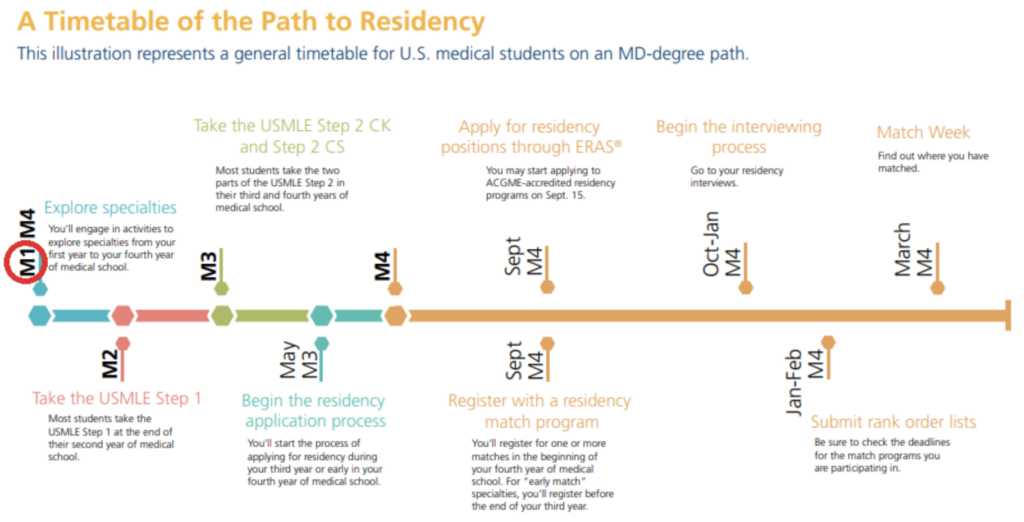
But running alongside that formal education in medicine is another hidden curriculum that rarely gets addressed directly.
No one formally teaches you how to build trust with patients in a way that creates long-term loyalty. Few people explain how referral patterns actually develop. We don’t spend much time discussing how to design a practice aligned with your personal values or how to set boundaries so that your career remains sustainable. Financial literacy is often treated as optional. Culture building is assumed to be intuitive.
And yet, these are the factors that determine whether a physician thrives or struggles in practice.
When I look at physicians who feel frustrated in their careers, it’s rarely because they lack technical ability. More often, it’s because no one taught them how to build a life inside of medicine.
Thankfully it is never too late.
7 Topics Medical School Misses That You Need to Succeed
Let's look at my 7 most impactful lessons in the hidden curriculum of medicine that all doctors need to master.
1. Building a Practice Begins With Clarity
When people ask about building a successful medical practice, they often want tactical advice. They want to know how to grow volume, how to increase referrals, or how to market themselves effectively. Those strategies matter.
But they are not the starting point.
The starting point is clarity.
Before you begin building anything, you have to define what success actually looks like for you. If you want a high-volume, procedure-heavy practice, that requires one set of decisions. If you prioritize flexibility and family time, that requires another. Or if academic productivity or research drives you, your structure will look different still.
Without defining your target, you end up inheriting someone else’s definition of success. That’s how misalignment creeps in. It’s also how burnout begins quietly.
Early in my own career, I found it helpful to write down what I wanted my practice to look like several years out. Not just financially, but culturally and personally. What kind of patients did I want to treat? What kind of colleague did I want to be? How did I want my weeks to feel like? Then I used this to assess how well my current practice matched that and what I needed to do to make it even better.
Clarity doesn’t guarantee ease, but it provides direction.
2. Early Momentum Requires Strategic Effort
Ideally in the early years of practice (but whenever you are starting works as well), availability matters. Being responsive to colleagues, taking challenging consults, and demonstrating reliability builds trust faster than any advertising campaign. When you are known as someone who shows up, especially in difficult moments, that reputation compounds.
I took cases that others were less enthusiastic about. Not recklessly and not outside my scope, but willingly. That willingness sent a signal. Colleagues remember who helped when it was inconvenient. Over time, those relationships become foundational to practice growth.
However, there is an important distinction between being available and being perpetually accessible. Strategic effort builds momentum. Unbounded effort builds exhaustion. Early in your career, saying yes frequently may be necessary. As your practice matures, learning to say no respectfully becomes equally important.
Sustainability should always be the long game.
Cognitive load builds in the small moments. DoxGPT reduces it.
Built for real clinical work. It pulls from 750+ peer reviewed journals and 200+ medical guidelines updated daily so every answer comes with sources you can actually verify.
DoxGPT reduces decision fatigue without lowering your standards, so you can think clearly even at the end of a long day.
3. Affability Is Not Optional
We tend to overemphasize technical skill and underemphasize relational skill in medicine. Competence is expected. It is the baseline. But what differentiates physicians in a competitive environment is often how they make others feel.
Being respectful to nurses and staff, communicating clearly with referring physicians, and treating patients with genuine attentiveness are not soft extras. They are strategic advantages. Medicine is relational. Patients talk to each other. Referring physicians discuss cases. Staff members shape the patient experience in ways we often underestimate.
You can be highly skilled technically, but if working with you feels difficult, growth will plateau. The hidden curriculum of medicine includes humility, professionalism, and relational intelligence. These traits rarely show up on exam scores, but they show up everywhere else.
4. Hard Work Still Matters
There is no substitute for effort. In baseball, no one becomes consistent without thousands of repetitions (even if the 10,000 hour rule is kind of BS). In medicine, reputations are built case by case, patient by patient.
That means being prepared. It means following up personally. It means calling a referring physician instead of delegating the conversation when nuance matters. These behaviors may feel small, but they accumulate.
Building or reinvesting our practices often requires more energy than we anticipate. That doesn’t mean sacrificing your health or your family. It means recognizing that building momentum requires focused effort. Over time, that investment creates optionality. But first, it requires intentional work.
5. Understanding the Business of Medicine
Some physicians recoil at the idea of discussing business within medicine. My goal with this blog is to change that. Because whether employed or in private practice, we function within economic systems. Ignoring that reality does not preserve purity; it creates vulnerability.
Understanding overhead, payer mix, scheduling efficiency, and staffing structures reduces anxiety. When you understand the financial mechanics of your practice, decisions feel deliberate rather than reactive. Financial literacy is not about maximizing income at all costs. It is about creating stability and flexibility.
Similarly, operational systems matter. A technically excellent physician working within a disorganized environment will feel constant friction. An organized practice with clear processes frees cognitive bandwidth for patient care. Investing in team development, workflow optimization, and thoughtful delegation pays dividends that extend far beyond revenue.
Medicine does not become less noble because we understand how it functions. And trust me, no patient wants their doctor thinking about making ends meet when they are treating them. And financially free doctors practice better medicine…hands down.
6. Preventing Burnout Through Intention
I've experienced burnout. And I think we can all agree that burnout rarely results from forgetting how to diagnose a condition. It stems from cumulative misalignment. It grows when boundaries are absent, when identity becomes tethered solely to productivity, when financial stress lingers in the background, or when purpose fades under administrative weight.
The hidden curriculum of medicine must include sustainability. That means protecting physical health, maintaining relationships outside of work, building financial security, and periodically reassessing whether your practice aligns with your values.
A physician who builds a career capable of lasting decades will ultimately serve far more patients than one who flames out early. Intentional longevity is a competitive advantage.
7. Teaching the Next Generation Explicitly
Coaching baseball changed how I teach residents and students. I no longer assume that they will simply “figure out” the parts of medicine that aren’t in textbooks. If professionalism matters, I say so directly. If financial awareness is important, I discuss it openly. Similarly, if boundaries are necessary, I model them intentionally.
The next generation deserves more transparency. They should understand how contracts work, how referral networks develop, how to manage energy and time, and how to define success on their own terms. These are not peripheral skills. They are central to building durable careers.
Just as I don’t leave character development to chance on the baseball field, we shouldn’t leave career development to chance in medicine. And just working to teach and exemplify this hidden curriculum in medicine helps me understand, learn, and benefit from it that much more.
DoxGPT cuts the repetition so you can focus on what actually requires your expertise.
Eight hours in, notes still unwritten, and the clinical questions keep coming. That is where DoxGPT earns its place.
From question to verified answer without leaving your workflow. No extra tabs, no wasted time, and fully HIPAA compliant so you can use it confidently at the point of care.
A Fuller Definition of Success in Medicine
When success is defined narrowly by RVUs, compensation, or volume, it eventually feels hollow. A more durable definition includes financial stability, professional autonomy, strong relationships, and meaningful impact.
Medicine remains one of the few professions where technical expertise and human connection intersect daily. That combination is powerful. But technical skill alone is insufficient.
The formal curriculum makes you a doctor. The hidden curriculum determines what kind of doctor you become and what kind of life you build within medicine.
If we want fulfilling, lasting careers, we have to teach and practice both. Here are some additional resources to help:
- 7 Ways for Doctors to Create Passive Income in Medical Practice
- The Biggest Barriers to Independent Medical Practice
- 5 Important Things You Need to Know About Buying Into a Medical Practice
What do you think? Is there a hidden curriculum in medicine? Did I miss any important parts of it? How did you learn this hidden curriculum? And how can we do better for future doctors? Let me know in the comments below!