I want to start with a quick disclaimer. I do not begrudge anyone who decides that clinical medicine is no longer for them. That is a deeply personal decision. We all have different priorities, different family situations, and different definitions of a meaningful life. There is no one “right” path.
But I do think it is worth explaining why I have chosen to stay, even with FIRE within grasp.
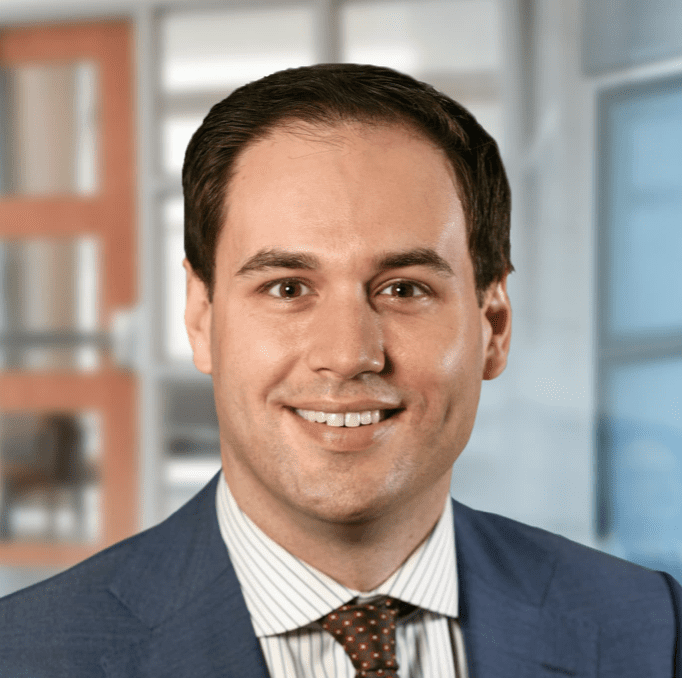
Because to my knowledge, I am one of the only physician finance voices who is still practicing full-time clinical medicine. I am a 1.0 FTE academic reconstructive plastic surgeon. Most of my practice is breast reconstruction, much of it microsurgical. I also serve as an associate program director for our residency program. And that matters.
Not because it makes me better. Not because it makes my perspective more important. But because it keeps me grounded.

- Eckard Enterprises helps high-income physicians explore oil and gas as an alternative asset class with the potential for both tax advantages and cash flow.
- In this webinar, Troy W. Eckard will explain why many doctors overlook energy investing and how direct ownership can fit alongside more traditional wealth-building strategies.
- We’ll cover how mineral rights and working interests work, where the potential tax benefits come from, and what physicians should understand before adding this kind of investment to their portfolio.
- Join us live Thursday at 8:00 PM EST for a practical look at how oil and gas can be used strategically by high-income physicians.
I Am Still in the Arena
Every day, I am living the same reality as you all.
I am managing a busy surgical practice. I am dealing with hospital systems, administrators, and the constant push and pull around autonomy. I'm navigating compensation structures that are always shifting. I am still very much aware of debt, even if mine is now more manageable. I am thinking about financial independence not as an abstract concept, but as a real goal with tradeoffs attached to it.
That proximity matters.
There is a big difference between talking about medicine and living it.
It is easy to give advice from the sidelines. It is even easier to give advice from the finish line, when the stakes are gone and the pressures are no longer present. But that kind of advice often misses the nuance. It misses the friction. It misses what it actually feels like to make these decisions in real time.
When you are still in it, the questions are different:
- Should I take on more cases or protect my time at home?
- Is this contract fair, or am I undervaluing myself?
- How do I balance building a practice with building a life?
These are not theoretical. They are daily decisions.
And I think there is value in sharing lessons while they are still unfolding, not just after everything has worked out.
• Most side gigs take time to build. This one pays fast.
• I do short, physician-only surveys on Sermo between cases and get paid for my input.
• They take just a few minutes and the money hits PayPal or gift cards right away.
• It’s not replacing my OR income, but it covers the little things that have a big impact—gifts, kids' activities, or the next date night.
My Financial Journey Was Built Inside Clinical Medicine
If you have followed from the start, you know that my interest in finance did not come from outside of medicine. It came directly from my experience within it.
Like many of us, I graduated residency with a large amount of student debt and very little formal financial education. I had spent years mastering my craft as a surgeon, but almost no time learning how to manage the financial reality that came with it.
That gap forced me to learn. I made (lots of) mistakes early. I overcomplicated things. I've worried about the wrong metrics. I felt the pressure to “catch up” financially after years of training.
But those experiences were not separate from my medical career. They were intertwined with it. My income, my schedule, my risk tolerance, and my long-term goals were all shaped by the fact that I was a practicing physician. And that is still true today.
When I write about investing, about debt, or about financial independence, I am not doing it from a vacuum. I am doing it as someone who is actively balancing those decisions with a full clinical workload. That perspective changes the conversation.
Medicine Still Has Meaning
There is another reason I stay. I genuinely enjoy taking care of patients. That can sound overly simple, especially in a time when burnout is high and the system often feels broken. But it is still very true.
Reconstructive surgery, particularly breast reconstruction, is deeply meaningful work. These are patients who are going through some of the most difficult moments of their lives. Being able to help restore not just form, but a sense of normalcy and control, is a privilege. Microsurgery adds another layer. It is technically demanding. It requires focus, precision, and constant improvement. There is a satisfaction in that process that is hard to replicate elsewhere.
And then there is teaching.
Working with residents, helping them develop both technically and professionally, is one of the most rewarding parts of my job. It forces me to stay sharp. It pushes me to articulate why I do things a certain way. And it connects me to the future of the field.
Those elements still matter to me. They are not outweighed by the frustrations. At least not yet, and hopefully never.
Graduating Residency Changed My Perspective
When I graduated residency, I thought I had a clear picture of what attending life would look like.
I was wrong. The transition from trainee to attending is not just about increased responsibility. It is about ownership. Suddenly, the decisions are yours. The outcomes are yours. The structure of your practice, to a large extent, is yours to shape.
That can be both empowering and overwhelming. It also reframes your relationship with time.
As a resident, your schedule is largely dictated. As an attending, you have more control, but that control comes with tradeoffs. Every “yes” to something in your practice is a “no” to something else, whether that is time with family, personal development, some other professional side quest or simply rest.
Understanding that has been critical for me.
It has made me more intentional about how I practice. It has also made me more aware that stepping away from medicine is not just a financial decision. And it's a decision about identity, purpose, and how you want to spend your time.
Financial Independence Is Not an Exit Strategy
One of the most common narratives in physician finance is that financial independence is a way out.
Earn enough. Invest enough. And eventually, you can leave. There is nothing wrong with that goal. But for me, financial independence is not about escaping medicine. It is about gaining flexibility within it. It's about practicing on my own terms.
It means I do not have to make decisions purely based on income. I can prioritize the types of cases I find most meaningful. I can invest more time in teaching. Plus I can say no to opportunities that do not align with my goals. In other words, financial independence enhances my ability to stay in clinical medicine, rather than pushing me out of it.
That distinction is important.
• Most side gigs take time to build. This one pays fast.
• I do short, physician-only surveys on Sermo between cases and get paid for my input.
• They take just a few minutes and the money hits PayPal or gift cards right away.
• It’s not replacing my OR income, but it covers the little things that have a big impact—gifts, kids' activities, or the next date night.
Real-Time Lessons Matter
I am not perfect. I still make mistakes. Boy, do I still second-guess decisions. I still learn things the hard way. But I think that is part of the value.
If you cannot make mistakes, you cannot learn. And if you cannot learn, you cannot share those lessons with others. Too often, advice is presented as if the path was linear and obvious in hindsight. It rarely is.
By staying in clinical medicine, I am able to share what is working and what is not in real time. Not just the outcomes, but the process. The uncertainty. The tradeoffs.
That is the kind of perspective I wish I had earlier in my career.
Why Is This At All Important?
So why does any of this matter? Because medicine needs more voices from within.
It needs people who are still practicing, still navigating the system, and still invested in improving it. Our arena needs perspectives that are grounded in current reality, not just past experience. It also needs to show that there are multiple ways to build a fulfilling career.
You can be financially literate without leaving medicine. You can pursue financial independence without hating your job. And you can build something outside of clinical work while still being fully committed to your patients.
These paths are not mutually exclusive.
I encourage you to share your voice and your story as well. Getting into the arena is tough. But ultimately, those are the voices that matter and make a difference. We all want the best for medicine – for our patients and ourselves – so let's make that happen.
For Now, I Am Staying
Someday, I may step away from full-time clinical medicine. But that decision will be based on what is right for my life, not because leaving is more lucrative or easier. For now, I am staying.
I am staying because I enjoy the work. I'm staying because it is meaningful and fulfilling to me. I am staying because it keeps me grounded in the realities that shape what I talk about here. And I am staying because I love being in the trenches with you (and hopefully there is some value I am able to give back as we both learn from each other on this journey).
Operating. Teaching. Learning. And sharing it along the way.
What do you think? Where does your current relationship with clinical medicine stand? Would you leave if you could? Can you? What makes you stay? What would it take for you to share your story? Let me know in the comments below!