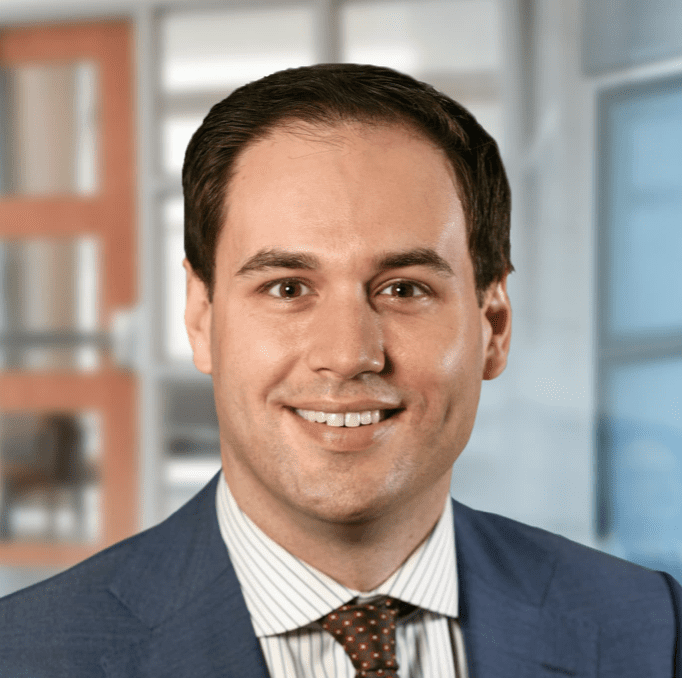
When I finished training in 2020 and stepped into attending life, my focus was simple: build my practice, pay down debt, and make smart financial decisions. I love medicine. I love operating. Leaving clinical practice was never the goal. But my wife and I started asking a different question early on: how do we create a life where medicine is something I choose to do, not something I am financially dependent on? That question ultimately led us to real estate and the freedom it's allowed us to experience.
For us, it was not about getting rich quickly.
It was about creating additional income streams, building long-term wealth, and protecting our autonomy in a healthcare system that is constantly changing.
- Eckard Enterprises helps high-income physicians explore oil and gas as an alternative asset class with the potential for both tax advantages and cash flow.
- In this webinar, Troy W. Eckard will explain why many doctors overlook energy investing and how direct ownership can fit alongside more traditional wealth-building strategies.
- We’ll cover how mineral rights and working interests work, where the potential tax benefits come from, and what physicians should understand before adding this kind of investment to their portfolio.
- Join us live Thursday at 8:00 PM EST for a practical look at how oil and gas can be used strategically by high-income physicians.
The First Deal That Changed Everything
We started small.
Right after training, Selenid and I bought a duplex in Buffalo, New York, where we live. It was a straightforward, local investment bought with a mortgage (one limited example of “good” debt) for a purchase price around $184,000 that ended up cash flowing about $1,000 per month.
That one real estate deal is not enough to get you or I to financial freedom. But that first deal did two important things:
- It proved that real estate could actually work.
- And it gave us momentum.
We used that cash flow, along with additional savings, to buy another property. Then another. Over time, that compounded into a portfolio of nine properties and 19 units that now generate roughly $10,000 to $11,000 per month in cash flow (I walk through exactly how we did that here).
It all started with one modest purchase and a willingness to figure things out as we went.
What You Actually Learn From Your First Property
The biggest lessons from that first investment were not financial. They were operational.
Real estate is a team sport.
Early on, every problem feels difficult because everything is new. A tenant calls with an issue and you are not sure who to contact. Something breaks and you are scrambling to figure out how to fix it.
Over time, that changes as you build a reliable team. For us, that meant a trusted handyman, plumber, electrician, and contractor. Now, when something comes up, it is much more streamlined. The tenant submits a request, we route it to the right person, and it gets handled.
The other major lesson was tenant selection. That remains one of the most important parts of investing. A good tenant makes everything easier. A bad tenant can create significant stress and financial loss. We've experienced both. But we've gotten better. That's why we stay particularly closely involved in this part of the process.
- Eckard Enterprises helps high-income physicians explore oil and gas as an alternative asset class with the potential for both tax advantages and cash flow.
- In this webinar, Troy W. Eckard will explain why many doctors overlook energy investing and how direct ownership can fit alongside more traditional wealth-building strategies.
- We’ll cover how mineral rights and working interests work, where the potential tax benefits come from, and what physicians should understand before adding this kind of investment to their portfolio.
- Join us live Thursday at 8:00 PM EST for a practical look at how oil and gas can be used strategically by high-income physicians.
When Things Don’t Go as Planned
Even with careful planning, things go wrong.
Recently, during a stretch of extreme cold in Buffalo, a pipe burst in one of our properties while it was vacant. The damage required about $25,000 in repairs. It was stressful, but it was manageable. Insurance covered most of the cost, repairs were completed, and the unit is now occupied again.
Experiences like this are part of owning real estate. The key is not avoiding problems but preparing for them and responding appropriately.
The difference is not avoiding problems. It is preparing for them and responding appropriately. Insurance covered most of the cost, repairs were completed, and the unit is now occupied again.
More important than the event itself is the mindset. There will be moments where you ask yourself, “Why am I doing this?” That is when your “why” matters.
The Importance of Having a Strong Why
For me and Selenid, the motivation behind real estate is both financial and personal.
Financially, it is about creating independence. I believe strongly that being financially secure makes you a better physician because it removes pressure and restores optionality.
Personally, it is about community. I invest in Buffalo because it is where I am from. Providing safe, affordable housing and being a good landlord matters to me.
Those reasons are what carry you through the inevitable challenges. This sense of purpose helps sustain you when the process becomes inconvenient or stressful, which it occasionally will.
How I Balanced Debt, Investing, and Real Estate
Early in my career, I could not find a perfect formula for how to allocate money between competing priorities.
So I kept it simple.
I divided our savings into thirds (I call it the 1/3 rule):
- 1/3 to paying off debt
- 1/3 to stocks and bonds
- 1/3 to real estate
The only requirement I set was that I wanted to be able to pay off my student loans within 5 years. That approach worked. I paid off my loans on schedule, and real estate cash flow helped accelerate that process.
At the same time, our real estate investments grew quickly and now make up a significant portion of our net worth (full breakdown here). Today, I still invest in more traditional assets like index funds and retirement accounts. Real estate is not a replacement. It is a complement.
Why Real Estate Appeals to Physicians
There are two main reasons I think physicians are drawn to real estate in particular.
First, passive income.
Even though active investing requires effort, the long-term goal is income that is not tied directly to your time in the hospital or clinic.
Second, tangibility.
Unlike stocks, real estate is physical. And, also unlike stocks, the real estate market is inefficient, which means you can “tinker” with your investments to improve them. You can see it, improve it, and directly influence its performance. That appeals to many physicians who are used to working in concrete, outcome-driven environments.
But the question I'm often asked is, “How involved do I really need to be?”
How Involved Do You Need to Be?
The level of involvement in real estate is flexible.
You can be very hands-on, as we are, while still outsourcing the physical work. Or you can hire a property management company and be largely hands-off.
The main exception is if you are pursuing certain tax advantages, such as Real Estate Professional Status, which requires significant documented involvement.
Otherwise, you can tailor your approach to fit your schedule and preferences.
Understanding the Spectrum of Real Estate Investing
Not all real estate investing looks the same.
There is a wide spectrum:
1. REITs (Real Estate Investment Trusts)
These are the most passive. They function like real estate index funds. You have no control and limited tax advantages, but they are simple and accessible.
2. Syndications and Private Funds
Here, you invest alongside others. A general partner manages the deal, and you are a limited partner. You may receive some tax benefits and higher returns, but you are trusting someone else to execute.
3. Direct Ownership
This is the most active approach. You own the property, control decisions, and benefit from the full range of tax advantages. It also requires the most involvement.
Each option has a role depending on your goals, time, and interest.
The Risks Physicians Often Overlook
One of the biggest mistakes I see physicians make is underestimating risks when investing in real estate.
Real estate is often presented as a guaranteed path to wealth. It is not. There are real downsides, including poor underwriting, unexpected repairs, and unreliable partners.
Physicians also tend to be very trusting, which can be a disadvantage in business. In medicine, we assume people are acting in our best interest. In real estate, that is not always the case.
If you are investing in a syndication, you are effectively handing your money to someone else. You need to vet them thoroughly:
- Track record
- Prior investor experiences
- Transparency in underwriting
- Alignment of incentives
There is no substitute for due diligence. That is why education is critical. You need to understand how to analyze a deal, even if you plan to invest passively.
- Eckard Enterprises helps high-income physicians explore oil and gas as an alternative asset class with the potential for both tax advantages and cash flow.
- In this webinar, Troy W. Eckard will explain why many doctors overlook energy investing and how direct ownership can fit alongside more traditional wealth-building strategies.
- We’ll cover how mineral rights and working interests work, where the potential tax benefits come from, and what physicians should understand before adding this kind of investment to their portfolio.
- Join us live Thursday at 8:00 PM EST for a practical look at how oil and gas can be used strategically by high-income physicians.
What It Means to Be A “Prudent” Real Estate Investor
For me, being prudent in real estate comes down to discipline.
It means letting the numbers guide your decisions. It means underwriting conservatively and building in a margin for error. And it means walking away from deals that do not meet your criteria, even if they look appealing on the surface.
Sticking to your standards is what protects you over time. For us, that means targeting at least a 10% cash-on-cash return. If a deal does not meet those criteria, we walk away. If it does, then we go for it as that is another real estate deal bringing us closer to financial freedom.
The Bigger Picture
Real estate has not pulled me away from medicine. If anything, it has strengthened my commitment to it.
Because when financial pressure is reduced, you practice differently, with more freedom.
You make decisions based on what is best for patients, not what is necessary to maintain a paycheck. You have the flexibility to change jobs, adjust your workload, or walk away from situations that are not a good fit.
That is what real estate has provided for me. Real estate is not an escape from medicine, but the freedom to practice it on my own terms.
Here are more resources to begin or optimize your journey to financial freedom using real estate:
- 401k vs. Real Estate: Which Is the Better Investment?
- 3 Ways To Turn Real Estate Losses into Gains
- Should Doctors Invest in Real Estate Just for the Taxes?
- Figuring Out If You Are a Better Active or Passive Real Estate Investor
What do you think? How do you view real estate investing as a physician? Is real estate a path to freedom and more focus on medicine or the opposite? Let me know in the comments below!