There was a time when I genuinely did not understand why doctors would pursue side gigs.
I went through medical school and seven years of surgical training with a pretty straightforward idea of how doctors made money. You became a doctor, went to work, took care of patients, and received a paycheck. If you wanted to make more money, the solution seemed equally straightforward: work more, take more call, operate more, see more patients, or pick up another shift.
That was pretty much the entire equation in my mind.
Toward the end of training, however, I became burned out and finally started learning about personal finance. One of the concepts that completely changed my thinking was realizing that my financial life did not have to depend entirely on my clinical paycheck.
Today, I am still a full-time employed plastic surgeon. I love being a surgeon and have no intention of giving that up, but my clinical income is no longer my only income.
Over the years, I have personally tried at least 8 different side gigs geared towards doctors

These have included paid medical surveys, blogging, podcasting, writing a book, creating an online course, consulting, speaking, and expert witness work. Some produced very little money. Others grew into meaningful income streams or businesses. A few were probably not worth the effort, while others opened doors that I never expected when I started.
That experience changed the way I think about physician side gigs. As I have written before, the goal of choosing a physician side hustle should not simply be to make yourself busier. It should be to create income in a way that fits your life, your priorities, and the freedom you are actually trying to build.
For me, the goal is no longer simply to make more money. The real goal is to create more options.
I have previously shared a broader guide to physician side gigs and passive income. Here, I want to take the next step and compare the actual work involved. How difficult is each opportunity to get into? How much of your time will it require once you start? And what kind of income potential are you working toward?
Those questions can lead to very different answers. Medical surveys may fit into a few spare minutes, while building a blog can require years of consistent work. Expert witness work uses your existing clinical expertise, but getting your first case can be a hurdle. Putting those tradeoffs side by side is more useful than treating every side gig as an equally good way to make extra money.
Below, I compare 17 clinical and non-clinical opportunities using the same three measures: effort, difficulty getting started, and potential income. I have personally tried eight of them, and I’ll share what that experience taught me along the way.

First, What Exactly Is a Physician Side Gig?
A physician side gig is simply a source of earned or business income outside your primary physician job.
That distinction matters because the term “side gig” often gets mixed together with investing or passive income. Buying index funds is not a side gig. Neither is investing passively in a real estate syndication or REIT. Those are investments.
Working as an expert witness, completing medical surveys, consulting for a medical device company, writing a book, creating an online course, or building an online business are side gigs because you are using your time, expertise, reputation, or skills to generate additional income.
Some side gigs are almost entirely active. Others can eventually become leveraged businesses in which your income becomes increasingly disconnected from the number of hours you personally work.
That distinction has become increasingly important to me. In fact, I have largely stopped believing in the idea of truly “passive” income and instead prefer to think in terms of leveraged income.
Clinical medicine is largely a 1:1 income model. I perform an operation, see a patient, or provide a service, and I get compensated for that work. Many physician side gigs operate exactly the same way.
Other opportunities work differently. They may allow you to create something once and get paid repeatedly, earn significantly more for an hour of highly specialized expertise, or eventually build an asset or business that has value independent of your ongoing hourly work.
Those are the opportunities that tend to interest me the most.
How I Ranked These Side Gigs for Doctors
I don't think every side gig deserves to be treated equally. Something that takes almost no effort but earns a few hundred dollars a month serves a very different purpose than something requiring years of work but carrying the potential to become a six-figure business.
For that reason, I rated each opportunity using three scales:
- Effort: 1 = very little effort, 5 = significant time and ongoing work
- Difficulty Getting Started: 1 = almost any physician can start quickly, 5 = substantial barriers, relationships, expertise, audience, or startup work required
- Income Potential: 1 = modest supplemental income, 5 = potential for significant five- or six-figure annual income and beyond
These ratings are obviously subjective. Specialty, geography, clinical experience, professional network, available time, and entrepreneurial skill all make a difference.
Having now experimented with many of these personally and spoken with countless physicians pursuing others, however, this is how I would generally rank them.
The Top Side Gigs for Doctors to Consider
But first a quick summary and comparison table…
| Physician Side Gig | Type | Effort | Difficulty to Start | Income Potential |
|---|---|---|---|---|
| Moonlighting | Clinical | 4/5 | 2/5 | 4/5 |
| Locum Tenens | Clinical | 4/5 | 3/5 | 5/5 |
| Telemedicine | Clinical | 3/5 | 2/5 | 3/5 |
| Cosmetic/Cash-Pay Medicine | Clinical | 4/5 | 4/5 | 5/5 |
| Paid Medical Surveys | Non-Clinical | 1/5 | 1/5 | 1/5 |
| Chart/Insurance Review | Non-Clinical | 3/5 | 2/5 | 3/5 |
| Expert Witness Work | Non-Clinical | 3/5 | 4/5 | 5/5 |
| Medical Consulting/Industry | Non-Clinical | 2/5 | 4/5 | 4/5 |
| Speaking | Non-Clinical | 2/5 | 4/5 | 4/5 |
| Freelance Medical Writing | Non-Clinical | 3/5 | 2/5 | 2/5 |
| Blogging/Content Creation | Non-Clinical | 5/5 | 1/5 | 5/5 |
| Podcasting | Non-Clinical | 4/5 | 2/5 | 4/5 |
| Writing a Book | Non-Clinical | 5/5 | 3/5 | 2/5 |
| Creating an Online Course | Non-Clinical | 5/5 initially | 4/5 | 5/5 |
| Coaching | Non-Clinical | 4/5 | 3/5 | 4/5 |
| Medical Director Roles | Non-Clinical | 2/5 | 4/5 | 3/5 |
| Building a Physician Business | Non-Clinical | 5/5 | 5/5 | 5/5 |
Clinical Side Gigs for Doctors
Clinical side gigs are usually the easiest place for doctors to start because you are monetizing the skill you already spent years developing. There is no need to build an audience, learn marketing, or develop an entirely new skill set.
The disadvantage is just as obvious: most clinical side gigs still require you to exchange more of your time for more money. That does not make them bad. In many circumstances, it makes them the smartest option.
1. Moonlighting
Effort: 4/5
Difficulty Getting Started: 2/5
Income Potential: 4/5
Moonlighting is probably the simplest physician side gig concept. You already know how to practice medicine, so you simply do more of it somewhere else.
Residents may moonlight internally or externally depending on their training program. Attendings can pick up shifts at another hospital, urgent care center, surgical center, or outside practice.
The biggest advantage is immediate income without having to learn a new skill. If your goal is to eliminate $30,000 of credit card debt or rapidly build an emergency fund, a handful of highly compensated extra shifts may be far more effective than spending two years trying to monetize a blog that nobody reads yet.
Of course, there is a downside. You are doing exactly what many physicians interested in side gigs are ultimately trying to escape: selling more hours of your life.
There is nothing inherently wrong with that model. Just recognize moonlighting for what it is. It is primarily an income accelerator rather than a source of leverage.
2. Locum Tenens
Effort: 4/5
Difficulty Getting Started: 3/5
Income Potential: 5/5
Locum tenens takes the moonlighting concept another step. Physicians temporarily work in hospitals or practices that need coverage, often because of staffing shortages, leaves, or difficulty recruiting permanently.
Compensation can be excellent, particularly in high-demand specialties and underserved areas. For a physician with schedule flexibility or willingness to travel, locums can become a substantial source of additional income.
Practical barriers include licensing, credentialing, travel, scheduling, and potentially being away from home. Your primary employment agreement may also place limitations on outside clinical work, so reviewing that contract before starting is important.
Again, locums is not passive income. Yet if your goal is simply to convert a limited number of available days into the largest paycheck possible, it can be extraordinarily efficient.
3. Telemedicine
Effort: 3/5
Difficulty Getting Started: 2/5
Income Potential: 3/5
Telemedicine offers something traditional moonlighting often does not: convenience.
Depending on your specialty and the opportunity, you may be able to work from home, eliminate commuting, and fit sessions around your existing clinical schedule. That flexibility can make telemedicine particularly appealing for physicians who want additional clinical income without sacrificing entire weekends or traveling somewhere else.
Licensing and regulatory considerations still matter. State medical boards generally regulate where physicians may practice, and the American Medical Association maintains resources on telehealth policy and state licensure considerations. Check out the AMA Telehealth Resource Center for more on getting into this as a side gig.
Telemedicine will probably never offer the same upside as building a highly leveraged business, but that is also not its purpose. For many doctors, the ability to turn a few convenient hours into additional income is exactly what they need.
4. Cosmetic or Cash-Pay Clinical Work
Effort: 4/5
Difficulty Getting Started: 4/5
Income Potential: 5/5
This opportunity is obviously very specialty dependent, but plastic surgeons, dermatologists, ophthalmologists, primary care physicians, and others may be able to develop cash-pay clinical services outside their primary job.
The financial upside can be substantial because you are escaping some of the limitations associated with traditional insurance reimbursement. At the same time, there are more moving parts. You need patients, infrastructure, scheduling, supplies, malpractice coverage, and potentially meaningful startup capital.
For the right physician, cash-pay work can eventually evolve from a side gig into an actual business. That transition brings far more income potential, but it also creates far more complexity.
Non-Clinical Side Gigs for Doctors
This is where physician side gigs became much more interesting to me.
Non-clinical opportunities allow us to monetize something other than physically seeing another patient. Doctors have far more valuable expertise than we generally appreciate, and companies, attorneys, publications, organizations, patients, and consumers routinely pay for that expertise.
5. Paid Medical Surveys
Effort: 1/5
Difficulty Getting Started: 1/5
Income Potential: 1/5
If a physician asked me for the easiest side gig they could start tomorrow, medical surveys would probably be my answer.
I actually do them myself. Surveys fit into pockets of time that otherwise would not be especially productive, sometimes between cases or whenever I happen to have a few minutes available.
In that sense, I am essentially getting paid to provide opinions based on knowledge that I already possess.
Will medical surveys make me financially independent? Absolutely not. But that highlights an important point about evaluating physician side gigs: every opportunity does not need to produce $100,000 per year to be worthwhile.
I think of survey income as micro-income. Maybe it pays for dinner, a kids' activity, a gift, or some other expense that I intentionally want to cover. My deeper breakdown of whether medical surveys are actually worth doing explains exactly why I use them this way.
For the tiny amount of effort required, medical surveys remain one of the easiest physician side gigs available.
6. Medical Chart and Insurance Review
Effort: 3/5
Difficulty Getting Started: 2/5
Income Potential: 3/5
Insurance companies and independent review organizations hire physicians to evaluate charts, claims, utilization decisions, disability cases, prior authorizations, and other medical records.
The attraction here is flexibility. Much of the work can often be completed remotely and according to your own schedule, allowing you to monetize clinical expertise without actually seeing another patient.
On the other hand, the work can become tedious and still represents a fairly direct exchange of time for money.
For a physician who wants predictable remote work without having to build an audience, business, or personal brand, chart review can be a very reasonable middle ground.
7. Expert Witness Work
Effort: 3/5
Difficulty Getting Started: 4/5
Income Potential: 5/5
Expert witness work is probably the physician side gig that has changed the most in my mind over the past few years.
For a long time, I wrote about the opportunity without actually doing it myself. Eventually, I decided that was not good enough. If I was going to talk about physician side gigs and recommend that doctors consider expert witness work, I wanted firsthand experience.
So I learned how the business worked and started putting myself out there.
Initially, not much happened. That is actually an important part of the story because many side gigs operate this way: you put in the work before the income appears.
Then inquiries started arriving. I began reviewing cases, providing opinions, and receiving additional opportunities.
What I have learned firsthand is why I now consider expert witness work one of the highest-leverage physician side gigs available. You are being compensated for exactly what you already know. Your value comes from years of clinical experience combined with your ability to objectively analyze a case and communicate your opinion clearly.
There is also a misconception that expert witness work means helping attorneys attack other physicians. That is not your role. Your job is to objectively evaluate the medical facts. Sometimes that means identifying care that fell below the standard, while other cases involve clearly explaining why a physician did absolutely nothing wrong.
The biggest hurdle is breaking into the field and getting those first cases. Once you develop experience and a reputation, however, the income potential can be substantial. My experience evaluating expert witness training also helped me understand why this particular opportunity has such strong leverage for physicians.
8. Medical Consulting and Industry Work
Effort: 2/5
Difficulty Getting Started: 4/5
Income Potential: 4/5
Doctors routinely underestimate how valuable their opinions are to companies trying to build products or services for physicians.
Medical device companies, pharmaceutical companies, healthcare startups, venture-backed businesses, and established organizations constantly need physicians to answer very practical questions. Would you actually use this? How does your current workflow operate? What problem are we missing? Why will physicians resist adopting this product? How would you design it differently?
Those questions may seem mundane to us because we live inside the healthcare system every day. To an outside company trying to understand that system, the answers can be extremely valuable.
The biggest obstacle is usually finding opportunities. Clinical reputation and professional networks matter, as does making it known that you are interested in consulting.
Conferences, professional societies, startup networks, LinkedIn, and direct relationships can all create opportunities. Highly specialized expertise becomes increasingly valuable in this category because the fewer people who can credibly answer a company's question, the more valuable your answer becomes.
9. Speaking
Effort: 2/5
Difficulty Getting Started: 4/5
Income Potential: 4/5
Paid speaking sounds deceptively simple. Walk onto a stage, talk for an hour, and collect a check.
The hard part, of course, is becoming someone an organization is willing to pay to put on that stage.
Speaking opportunities usually emerge from something else. Maybe you developed unusual clinical expertise, published important research, wrote a book, built an online platform, developed a recognized niche, or became known for consulting in a particular area.
Once that reputation exists, speaking can offer attractive compensation relative to the actual presentation time. It can also reinforce other opportunities by increasing your visibility and authority.
10. Freelance Medical Writing
Effort: 3/5
Difficulty Getting Started: 2/5
Income Potential: 2/5
Medical websites, publications, companies, and educational organizations all need accurate medical content.
Doctors have an obvious advantage here because we actually understand the subject matter. Physicians who enjoy writing can contribute articles, educational materials, CME content, patient education, technical content, or marketing material.
The barrier to entry is relatively low, particularly if you already have examples of your writing. Income potential, however, becomes more limited if you remain purely a freelancer.
Where writing becomes significantly more powerful is when you use it to build something else. That is exactly what happened to me.
11. Blogging and Content Creation
Effort: 5/5
Difficulty Getting Started: 1/5
Income Potential: 5/5
Starting a blog is ridiculously easy. Building a successful blog is ridiculously difficult.
When I started The Prudent Plastic Surgeon, I had never done anything like it. I had never built a website, had no audience, and possessed essentially no experience with online business.
What I did have was the conviction that financial education had dramatically improved my life and the realization that I enjoyed writing about what I was learning.
So I started.
For quite a while, essentially nobody read it, and it certainly did not make much money. Slowly, though, an audience grew. That audience eventually led to affiliate income, sponsorships, courses, speaking opportunities, partnerships, consulting, a podcast, and ultimately an actual business.
That evolution is why I rank content creation as having 5/5 income potential despite the enormous amount of effort involved.
Content provides leverage. A blog post that I wrote years ago can still help someone today and can still generate income today. I do not need to rewrite the article every time a new person reads it.
The same principle applies to YouTube, newsletters, social media, podcasts, and other content platforms. Starting costs very little, but succeeding requires persistence.
12. Podcasting
Effort: 4/5
Difficulty Getting Started: 2/5
Income Potential: 4/5
Podcasting shares many characteristics with blogging. Getting a microphone and publishing episodes is fairly straightforward, while building an audience that reliably listens is much harder.
My Finance Flash Go podcast became another way for me to share financial ideas and build a deeper relationship with the audience surrounding The Prudent Plastic Surgeon. Monetization can come through sponsorships, advertising, affiliate relationships, or by directing listeners toward another part of your business.
I would not start a podcast simply because you want another source of income. Start one because you have something you genuinely want to talk about repeatedly. If you do not enjoy the process, the odds that you will publish long enough to build an audience are pretty low.
13. Writing a Book
Effort: 5/5
Difficulty Getting Started: 3/5
Income Potential: 2/5
I have written a book, and one thing that surprises many people is that books are generally not a fantastic direct way to make money.
Writing one requires an enormous amount of work relative to the royalties most physician authors will receive. That does not mean writing a book is a bad side gig because its greatest value may come indirectly.
A book builds credibility and establishes authority. It can create speaking opportunities, consulting opportunities, media appearances, coaching clients, or other business opportunities worth significantly more than the royalties from the book itself.
For that reason, I think of a book less as a paycheck and more as an asset.
14. Creating an Online Course
Effort: 5/5 initially, 2/5 ongoing
Difficulty Getting Started: 4/5
Income Potential: 5/5
Online courses represent one of the clearest examples of leveraged income.
You create the curriculum, record the material, build the infrastructure, and then one person can buy the course or 1,000 people can buy it without requiring a proportional increase in your time.
I created my own course, Graduating to Success, using lessons from my financial journey. One of the biggest lessons I learned, though, was that creating the course is not necessarily the hardest part.
Distribution is.
You need an audience or some other reliable way to reach the people who need what you created. That is why I generally recommend building an audience or distribution channel before spending months building a course rather than doing it the other way around.
15. Coaching
Effort: 4/5
Difficulty Getting Started: 3/5
Income Potential: 4/5
Physicians have built coaching businesses around career development, wellness, leadership, finance, specialty-specific skills, admissions, productivity, and countless other niches.
Individual coaching remains highly active because you are still exchanging time for money. Unlike clinical work, though, coaching can often evolve into something more scalable.
One-on-one coaching can become group coaching. Group coaching can lead to courses, memberships, communities, or other products.
As with consulting, the important question is whether you possess a specific skill or experience that solves a problem someone is willing to pay you to help solve.
16. Medical Director Roles
Effort: 2/5
Difficulty Getting Started: 4/5
Income Potential: 3/5
Physicians may serve as medical directors for healthcare organizations, startups, facilities, medical spas, home health organizations, or other businesses.
These roles can provide relatively consistent compensation without requiring full-time clinical responsibility, which is attractive. Still, this is an area in which physicians need to be careful.
Do not accept money simply to lend someone your medical license.
Before accepting a role, understand exactly what you are supervising, what your professional responsibilities are, what malpractice protection exists, and whether you are comfortable attaching your reputation to the organization. A low-effort paycheck stops looking attractive very quickly if it creates high-liability exposure.
17. Building a Physician Business
Effort: 5/5
Difficulty Getting Started: 5/5
Income Potential: 5/5
This category is intentionally broad because entrepreneurship can take almost any form.
You might create a medical device, build software, launch a healthcare company, develop a skincare line, start a medical education company, create an agency, or build something completely unrelated to medicine.
Entrepreneurship offers the highest potential upside on this list. It also comes with the greatest uncertainty and highest risk of failure.
That uncertainty can be particularly uncomfortable for doctors because we are used to succeeding inside highly structured systems. College led to medical school. Medical school led to residency. Residency led to attending practice. There was always another box to check.
Business does not work that way.
There is no syllabus, and the correct answer is often not obvious. That unpredictability is difficult, but it is also where enormous leverage can exist.
So Which of These Side Gigs for Doctors Is Best?
There is no single best physician side gig because the answer depends entirely on what you are trying to accomplish.
If you need money immediately, moonlighting or locum tenens probably beats starting a blog. Someone looking for effortless spending money may find medical surveys hard to beat. A physician with substantial clinical expertise who wants a high hourly rate without seeing additional patients should seriously consider expert witness work.
Content creation makes more sense for someone who enjoys writing, speaking, or creating and is willing to play a long game. Entrepreneurship, meanwhile, offers the largest ceiling for doctors willing to tolerate uncertainty.
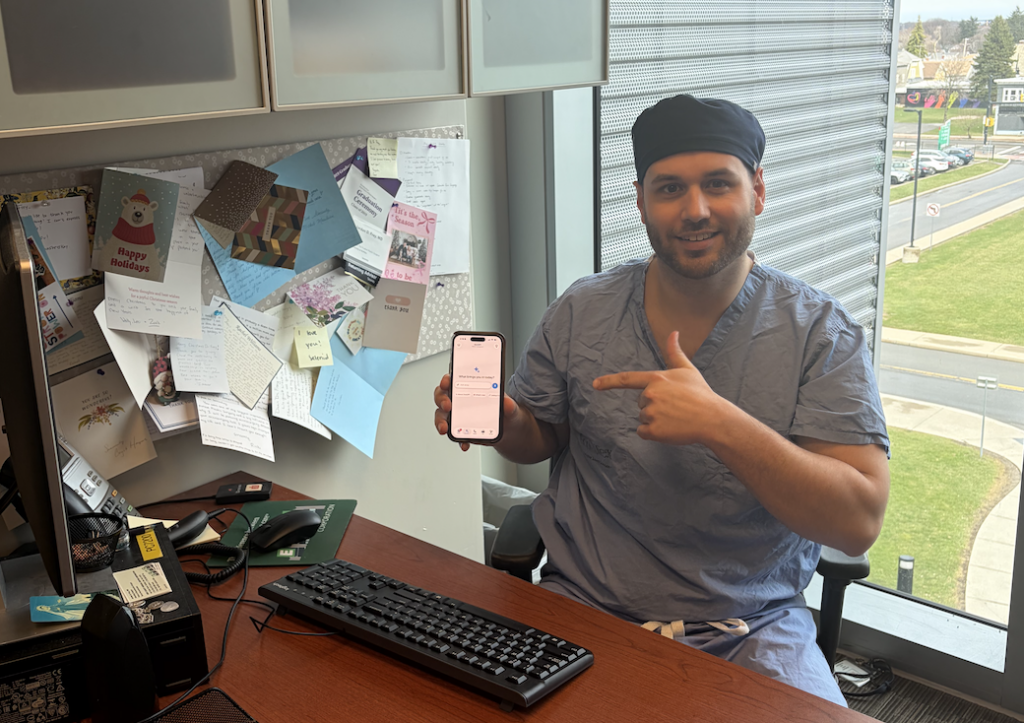
That is the framework I wish I understood when I first started exploring side gigs. My broader approach to choosing the right side hustle is essentially to work backward from the life you are trying to create rather than blindly choosing whichever opportunity appears to pay the most.
The Biggest Mistake Doctors Make With Side Gigs
I think the biggest mistake doctors make with side gigs is chasing the money first.
The best side gigs I have pursued started with something that I either already knew how to do or genuinely wanted to learn. That matters because nearly every meaningful side gig takes longer to develop than you expect.
If you hate writing, do not start a blog simply because somebody told you physician bloggers can make money. Locums probably makes little sense if you despise traveling. Expert witness work does not magically become a good fit if reviewing legal cases makes you miserable, no matter how attractive the hourly rate appears.
Instead, look for the overlap between three things: what you are good at, what you actually enjoy or find interesting, and what someone else is willing to pay for.
That is usually the best place to start.
Your Side Gig Is Also a Business
This was another lesson I learned only after I actually started earning side-gig income.
Once meaningful 1099 income begins coming in, you enter a different financial world. You may have legitimate business deductions, need better bookkeeping, or eventually benefit from opening a retirement account for your self-employed income.
Depending on the structure of your side gig, a one-participant or solo 401(k) may be one option. The IRS maintains detailed guidance on retirement plans available to self-employed individuals, including one-participant 401(k) plans.
Taxes also become more complicated because nobody may be withholding money from your side-gig income.
I had absolutely no idea about estimated quarterly taxes before I started earning meaningful 1099 income. Once my various businesses and side gigs began generating income, I learned that our pay-as-you-go tax system may require estimated payments during the year rather than simply waiting until April. The IRS explains that people with self-employment income may need to make estimated payments and can face underpayment penalties if they do not pay enough throughout the year.
Today, I make estimated tax payments throughout the year based on calculations and projections from my tax advisor. I go through the process and the lessons I learned in much more detail in my guide to estimated quarterly taxes for physicians: Estimated Quarterly Taxes for Physicians: Who? When? Why?
You do not need to become an accountant before making your first dollar outside medicine. Once real income begins coming in, however, treat your side gig like a real business.
Why I Think More Doctors Should Consider Side Gigs
I do not think every doctor needs to become an entrepreneur. Nor do I think physicians should fill every unoccupied minute with another way to make money.
That would defeat the entire purpose.
As my career has progressed, I have actually become increasingly protective of my time. I have a wife, three kids, friends, hobbies, youth baseball teams that I coach, and plenty of things I would rather do than simply work more.
So why continue building alternative income streams?
Because they buy freedom.
Clinical medicine feels different when you know that your family's entire financial future does not depend on your next clinical paycheck. You can say no more easily, negotiate differently, reduce your schedule one day if you choose to, leave a bad job, or take a calculated risk on something new.
Most importantly, you can practice medicine because you want to rather than because financially you have no other choice.
This is also why I separate side-gig income from the truly passive or leveraged income streams that form another part of our financial plan. Those income sources serve different roles, but together they reduce our dependence on any single paycheck.
Physicians also need to get over the idea that accepting money for legitimate expertise somehow means we are selling out.
There is obviously a line. I would never recommend something I do not believe in or compromise my professional integrity for a paycheck.
At the same time, companies routinely pay lawyers, engineers, consultants, executives, and other professionals for their expertise. Why should doctors assume that the knowledge we spent a decade or more acquiring should always be given away for free?
It shouldn't.
The Bottom Line on Side Gigs for Doctors
When I first learned about side gigs for doctors, I thought the goal was simply more income.
Now I see them very differently.
The real goal is optionality.
One physician might make $500 per month completing medical surveys. Another may make tens of thousands of dollars doing expert witness work. Someone else could build a business that eventually becomes worth millions.
Those numbers matter, but what the income allows you to do matters even more. Extra income can help you pay off debt, invest more, work less, take fewer calls, spend additional time with your family, or simply know that medicine is no longer your only financial option.
Doctors do not need 10 side gigs. You probably do not even need three.
What you need is the right one for you.
Pick something that fits your skills, your goals, and the life that you are actually trying to build. Then start, learn as you go, and resist the urge to wait until everything is perfect.
You can optimize later.
What do you think? Should doctors pursue side gigs? Do you? Which side gigs are the most worthwhile for doctors to pursue? Which ones aren't worth it? Share your thoughts below in the comments!