
Most physicians hear the word “Ponzi scheme” and immediately think the same thing.
Obviously a scam.
And they are right. A Ponzi scheme is quite literally a form of investment fraud. But that simple recognition can also create a dangerous sense of security. We assume that because we know Ponzi schemes are bad, we would recognize one immediately.
After all, we are doctors. We made it through medical school, residency, board exams, and everything else required to practice medicine. Surely we are sophisticated enough not to hand over our money to someone running an obvious scam.
Unfortunately, history tells us otherwise.
Ponzi schemes don't survive because everyone investing in them is financially naive. They survive because they are deliberately constructed to appear legitimate. They exploit trust, social proof, greed, fear of missing out, and sometimes our own confidence in our ability to recognize a bad investment.
And physicians can make particularly attractive targets.
What exactly is a Ponzi scheme?
At its core, a Ponzi scheme is surprisingly simple.
Someone presents you with an investment opportunity. Usually the investment promises attractive returns, often with surprisingly little risk. You invest $100,000 expecting that the underlying investment will grow your money.
Except there isn't really an investment.
Instead, the person running the scheme takes money coming in from newer investors and uses it to pay supposed “returns” to earlier investors. The organizer may also siphon off some of the money to fund their own lifestyle.
As the SEC explains through Investor.gov, the entire operation therefore depends on a constant supply of new investors.
Imagine I promise you a spectacular return on $1 million. You give me the money, but instead of investing it, I spend it. Eventually you want your money back plus your investment return. No problem. I simply find another investor willing to give me even more money. Some of their money goes to you, which makes it look like my investment strategy worked exactly as promised.
You tell your friends how great your investment has been. They invest too. And the cycle continues. Boom, you have a Ponzi scheme.
Until it stops working.
Eventually there aren't enough new investors coming in to satisfy withdrawals from existing investors. Or enough people simultaneously ask for their money back. Because there are few or no actual assets producing the returns being reported, the entire structure collapses.
The original Ponzi scheme
The scheme is named after Charles Ponzi, although he certainly wasn't the first person to invent financial fraud.
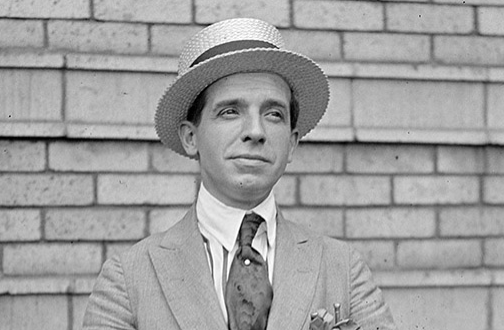
In 1920, Ponzi famously promised investors enormous returns through a strategy supposedly involving international postal reply coupons. The basic economic idea behind the strategy wasn't completely ridiculous. Currency differences theoretically created opportunities for arbitrage.
The problem was that Ponzi wasn't actually making money that way.
Instead, money from newer investors was being used to pay earlier investors. He promised investors returns of 50% within a matter of months, and thousands piled in. Ultimately, investigators found that despite all of his claims about postal coupons, his company owned only a tiny amount of them.
A century later, the details of the investment may sound quaint.
The psychology doesn't.
Bernie Madoff showed how sophisticated investors can still get fooled
The most famous modern example is obviously Bernie Madoff.
Madoff wasn't some guy operating out of his basement promising strangers on the internet that he could triple their cryptocurrency overnight.
He had tremendous credibility. His investment firm had existed for decades. He was a prominent figure on Wall Street. Wealthy individuals, investment funds, charities, and sophisticated investors trusted him with enormous amounts of money.
His investment advisory business was also a giant Ponzi scheme.
When the scheme collapsed in 2008, Madoff Securities reported more than 4,000 investment advisory accounts supposedly worth approximately $65 billion. In reality, the firm had only about $300 million in assets at the time.
I've actually written about Madoff before in one of my favorite strange financial stories involving Bobby Bonilla and the New York Mets.
Mets ownership believed they could afford Bonilla's famous deferred contract partly because they expected to continue earning strong returns on money invested with Madoff. We know how that turned out.
And there is an important lesson here: very wealthy and successful people with access to professional advisors can still get fooled.

So why might doctors be particularly susceptible?
This is the part that matters most to me.
Physicians are high-income earners. Eventually, most of us accumulate meaningful investable assets. That alone makes us attractive targets for anyone selling financial products, legitimate or otherwise. But we have some additional vulnerabilities.
Most of us receive almost no formal financial education during medical school or residency. We become experts in medicine while remaining complete beginners when it comes to investing. I certainly did.
That's why I am such a big believer in developing your own basic financial literacy. You don't need to become a professional investor. But you need enough knowledge to recognize when something doesn't make sense.
There's another physician-specific vulnerability that I think is even more important. We trust other doctors. If some random person contacts you about an incredible investment opportunity, your defenses immediately go up. But what happens when the opportunity comes from another physician?
Maybe it's another surgeon at your hospital. Maybe someone from residency invested. Or maybe a physician you respect tells you they've been receiving 15% returns for years.
Suddenly it feels different.
This is essentially affinity fraud. Scammers can exploit membership in a trusted group, whether that group is based on religion, ethnicity, profession, community, or something else. The SEC specifically warns investors that shared affiliations and personal relationships can be used to create trust around fraudulent investments.
Being introduced to an investment by another doctor does not make it a good investment
It doesn't even necessarily mean that doctor is knowingly misleading you. They may simply be another victim who believes the returns showing up on their statement are real.
Nor does this mean that every deal introduced to you by another physician is untrustworthy. It just means you need to still do your due diligence and there is no excuse not to understand exactly how any deal works. Trust but verify at the very least.
Unfortunately I see this happen to doctors all too frequently…
How do you spot potential Ponzi schemes?
Fortunately, there are some pretty consistent warning signs.
The biggest is probably the most obvious: Ponzi schemes generally promise unusually high returns with unusually low risk. Risk and return are related. There is no legitimate investment that reliably offers enormous returns without meaningful risk.
The SEC also identifies overly consistent returns as a warning sign. Real investments fluctuate. Markets go down. Businesses struggle. Real estate deals encounter problems. Some element of volatility is a feature, not a bug in the investment world. An investment somehow generating positive returns month after month regardless of what is happening in the broader economy deserves additional scrutiny.
Other warning signs include unregistered investments, unlicensed sellers, secretive or unnecessarily complicated strategies, questionable paperwork, and difficulty withdrawing your money.
I would add a few additional practical questions:
- Where exactly is the return coming from?
- What are the underlying assets?
- Who independently holds or verifies those assets?
- What could cause me to lose money?
- Can I explain how this investment works to someone else?
- And perhaps most importantly, why am I being offered this incredible opportunity?
If the answers aren't clear, don't invest.
This is especially important with private investments, including private real estate deals. I've written before that doctors absolutely don't need to invest in real estate, and passive investments require significant due diligence precisely because you are placing substantial trust in the operator.
Complexity isn't sophistication. Often times complexity is simply complexity.
Financial education is your best defense
One of the most important lessons I have learned in my financial journey is that you don't need to know everything.
Instead, you just need to know enough.
You need enough knowledge to understand the difference between reasonable and unreasonable expected returns. You need to understand that risk never disappears simply because someone says it does. And you need to understand incentives.
That applies to obvious investment fraud, but it also applies to everyday financial advice.
Not every person giving doctors questionable financial advice is running a Ponzi scheme. Obviously not. But incentives matter.
Some financial professionals are compensated based on assets under management. Others receive commissions for selling particular products. That doesn't automatically make their advice bad, but you should understand how the person giving you advice gets paid.
It's one reason I believe physicians need to perform their own due diligence when deciding whether and how to work with a financial advisor.
Ultimately, your financial education gives you the ability to tell good advice from bad advice.
The good news for doctors
Here's the irony.
Most physicians don't need spectacular investment returns.
Our greatest wealth-building advantage is usually our income. If we maintain a reasonable savings rate, invest consistently in broadly diversified assets, minimize unnecessary fees, and allow compound interest to work over decades, the math becomes incredibly powerful.
We don't need the investment promising 25% annual returns. We don't need the secret strategy available only to doctors. Certainly we don't need the once-in-a-lifetime opportunity that somehow needs our money by Friday. And we definitely don't need the investment that “can't lose.”
Boring works.
Build a written financial plan (my latest one is right here). Save consistently. Invest intelligently. Understand what you own. Perform due diligence before handing anyone your money.
And when someone promises you spectacular returns with almost no risk, remember something every physician already understands from medicine.
When something sounds too good to be true, it's worth investigating why.
What do you think? Have you ever encountered an investment opportunity that seemed too good to be true? What gave it away? How can doctors avoid falling for Ponzi schemes and bad investments? Let me know in the comments below!


One Response
Good observations.
When a Dr tells you about his “guy” and the deal you might get in,
Run 🏃🏻➡️