One of the strange realities of modern medicine (and life in general) is that the better you get at your job, the more non-physician work seems to get piled onto your plate. And the weird part is, if you actually step back and think about it financially, it does not make much sense.
Most physicians are effectively operating at a very high hourly rate. For many attendings, that number is easily $400+ an hour. But then you look at how we actually spend our time during the day.
You spend years learning how to make difficult decisions, manage risk, interpret nuance, and do work that very few people can do. And then in the middle of that, you are also clicking through tabs to check a drug interaction, rewriting patient instructions into plain English, digging through PubMed, documenting after a long OR day, and trying to piece together a clinical question while a waiting room or inpatient list keeps moving.
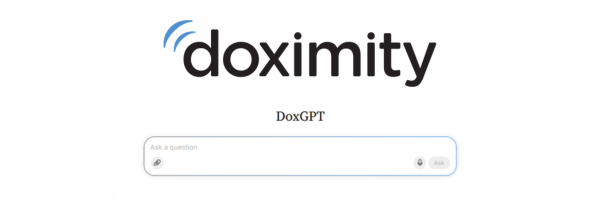
Time is money in medicine. AI only matters if it actually gives you that time back. That’s why I use DoxGPT. Quick drug checks, clinical questions, administration tasks, all done in under a minute.
Your time is worth hundreds of dollars an hour. Stop wasting it on tools you can't trust. DoxGPT helps you get that time back without sacrificing quality.
That disconnect has become impossible for me to ignore
Because this is not really just a technology issue. And it is not just an efficiency issue either. It is a physician time issue.
As doctors, our time is not valuable only because of what we are paid per hour. It is valuable because of what that time is supposed to be used for. Clinical judgment. Patient care. Communication. Decision making. The parts of medicine that actually require a physician.
So when we spend too much of that time on fragmented admin work, repetitive lookups, and low leverage tasks, there is a cost. Not just to us, but to our patients too.
That is where I think AI can actually be useful. Not as some magical replacement for clinical judgment. Not as a gimmick. And definitely not as something that should be blindly trusted. But as a tool that can help buy back physician time if it is used in the right way.
For me, that is where DoxGPT has started to earn a place. Not because it can do everything. And not because I think any AI tool should be trusted blindly. But because in the right moments, it can help shorten the distance between question, answer, and action.
That is really the standard I care about.
Not whether AI can sound smart. Not whether it can answer every question. But whether it can make me a more efficient doctor without making me a sloppier one.
The real tax on physician time
I think the bigger issue is broader than documentation alone. It is the constant drag of fragmentation of our attention, our time, and our efforts.
It is switching between tools. Looking something up in one place, checking a medication in another, reviewing a paper in another, then jumping back into the chart and trying to hold the whole clinical picture together in your head. It is the extra five minutes here, the extra three minutes there, the repeated mental reset that happens every time you leave one task and re-enter another.
That may not sound like much in isolation. But over the course of a clinic day, a call day, or a long stretch in the OR, that adds up quickly.
And more importantly, it creates cognitive fragmentation.
That matters because medicine is not assembly line work. Good care depends on attention. On pattern recognition. On judgment. On being able to synthesize a lot of moving parts without missing something important. It depends on flow in many ways. But the healthcare system and our day-to-day lives as doctors seems designed to disrupt the flow state we most need. Every unnecessary layer of friction pulls from the same finite pool of energy we need for that higher level work.
I have felt this especially after long operative days. After an eight hour case, the last thing you want is to sit down and do another hour of low leverage administrative cleanup. That is exactly the kind of moment when I want fewer tabs, fewer steps, and less friction between the question in front of me and the information I need.
So when I think about tools like DoxGPT, that is the first lens I use. Does this actually reduce that friction? Does it make it easier to move from question to answer without breaking my focus?
Where AI actually earns its keep
This is where I think the conversation around AI often gets off track.
A lot of the marketing makes it sound like AI should do everything. Diagnose. Write. Summarize. Recommend. Automate. Basically become your all-purpose digital co-pilot.
I don’t think that is the right frame.
In my experience, AI earns its keep in medicine not when it tries to do everything, but when it helps with specific high-friction tasks that eat up time and mental bandwidth.
For me, that includes quick clinical reference checks. Medication interactions. Questions that fall just outside my immediate specialty lane. Breast health questions. Chemo-related medication issues. Situations where I do not need a long essay. I need a fast, reliable starting point that helps me orient myself and move to the next step.
So what does that actually look like?
Sometimes it is a patient in clinic on a long medication list, and I want to quickly confirm whether two drugs can be given together or whether a cancer therapeutic impacts neutrophils and the healing process so I can effectively plan surgery. That is not a complicated question, but it becomes one if I have to bounce between multiple resources. That is a moment where I will open DoxGPT, ask the question, and then immediately look at the source it is pulling from.
Sometimes it is a question that sits just outside my lane. Not something I am unfamiliar with, but something I want to sanity check before making a decision. Again, I am not looking for a final answer. I am looking to get oriented quickly and then decide whether I need to go deeper.
Other times, it is less about clinical decision making and more about communication.
There have been plenty of times where I know exactly what I want to say to a patient, but translating that into something clear and plainspoken takes another step. Having a tool help draft a cleaner explanation or visit summary gives me a starting point that I can tailor to the patient in front of me.
The same is true during transitions of care. Discharge is one of the highest risk moments in medicine, and yet it is often where communication is the weakest. Turning a physician-focused summary into something a patient or primary care physician can actually use takes time. Anything that helps structure that more clearly and efficiently is useful.
And then there is documentation.
After a long clinical day, especially after time in the OR, even having help tightening a note, organizing an assessment and plan, or making sure the structure is cleaner can be genuinely helpful.
That is where I think DoxGPT earns its keep. Not by replacing judgment, but by helping with the repetitive, high-friction parts of clinical work that slow physicians down.
Cognitive load builds in the small moments. DoxGPT reduces it.
Built for real clinical work. It pulls from 750+ peer reviewed journals and 200+ medical guidelines updated daily so every answer comes with sources you can actually verify.
DoxGPT reduces decision fatigue without lowering your standards, so you can think clearly even at the end of a long day.
Why trust matters more than speed
This is the dividing line for me.
The biggest concern I have with general AI tools in clinical settings is not that they are imperfect. Everything is imperfect. The real problem is that they can be confidently wrong.
Poor sourcing. Outdated information. Hallucinated references. Answers that sound polished but are not actually anchored in anything trustworthy. That is the stuff that makes a tool dangerous in medicine.
And that is also why I do not think the right question is, “Is AI useful?” The better question is, “What kind of AI is trustworthy enough to belong in a clinical workflow?”
For me, that trust stack starts with transparency. I want backlinks. I want citations. I want to be able to verify where an answer came from. I want to know whether the source is something I would actually respect if I pulled it myself.
That is one of the reasons I have gravitated toward DoxGPT over more general tools.
It is not just trying to be a chatbot layered on top of medicine. It is trying to function more like a clinical reference tool that also happens to use AI. The built-in drug reference matters. The ability to get sourced answers matters. The ability to move quickly from answer to underlying literature matters.
And the emphasis on physician oversight matters too
One of the biggest issues with AI in medicine is not just that it can be wrong. It is that it can be wrong in a very confident voice. So anything that pushes the tool toward more transparent sourcing, more physician review, and more defensible answers is moving in the right direction.
That is where something like PeerCheck comes in.
PeerCheck is Doximity’s system for adding physician review into AI answers. Instead of relying only on the model, answers are reviewed and refined by practicing physicians, often by specialists in the specific area being asked about.
And the scale here is what really stands out. Doximity is building this with a network of more than 10,000 physicians, pulling from a platform that already includes millions of clinicians.
Because medicine is not general. If you are dealing with something straightforward, a general answer is fine. But if you are dealing with something more nuanced, a rare condition, a complex management decision, something that sits in a narrow subspecialty, you do not just want a broadly correct answer.
You want input shaped by someone who actually works in that space. And the early traction suggests this is not just theoretical.
Doximity reported more than 300,000 clinicians using its AI tools over a recent three-month period. The platform itself already reaches the majority of U.S. physicians, and it has expanded into more than 300+ health system partnerships with 100+ using their AI suite.
To me, that matters less as a growth story and more as a signal of where this is being tested. These are not edge cases or isolated users. This is happening in real clinical environments, across different systems and specialties.
Speed matters too
If a tool is slow or clunky, you simply will not use it in the moments where it would actually help.
That is one thing I have noticed with DoxGPT. It is quick enough that I can actually use it during a clinic visit or in between tasks without breaking my workflow. I am not waiting around or bouncing between multiple tools. It fits into those small windows where these questions actually come up.
But in medicine, speed only matters if it comes with trust. Because in medicine, we’re not just looking for an answer. We’re looking for an answer we can stand behind, not think about later in the day and wonder if we gave the best possible information to the patient.
That does not mean any tool should get a free pass. I still think the physician has to verify, apply judgment, and decide what actually fits the patient in front of them. But I do think the future of clinical AI is going to belong to tools that understand a simple truth: physicians do not just want quick answers. They want answers that are both efficient and defensible.
That is a very different standard.
How this actually fits into my workflow
I think this is where people get confused. They hear a physician say AI is useful and assume that means the tool is somehow replacing their thinking. That is not how I use it.
I am not outsourcing clinical judgment to AI. I am integrating AI into the places where it helps me move more efficiently through work that still depends on my judgment. That might mean pulling it up during a clinic visit for a quick medication check. It might mean using it when I am covering unfamiliar patients and need to quickly orient myself to what has been going on over the past 24 to 48 hours. It might mean using it after a visit to help turn a dense medical plan into something more understandable for a patient. Or it might mean using it at the end of a long day to clean up documentation when my mental bandwidth is already stretched.
In each of those cases, the role is the same. The tool is there to support the workflow, reduce friction, and help me get to a better final product faster.
But I am still the physician.
I am still the one deciding what applies and what does not. I am still the one responsible for what gets said, documented, recommended, and done. And I think that distinction matters a lot, especially as more hospitals, companies, and platforms try to insert AI deeper into care delivery. Because the goal should not be to make physicians less central. It should be to protect physician attention for the things only physicians can do.
DoxGPT cuts the repetition so you can focus on what actually requires your expertise.
Eight hours in, notes still unwritten, and the clinical questions keep coming. That is where DoxGPT earns its place.
From question to verified answer without leaving your workflow. No extra tabs, no wasted time, and fully HIPAA compliant so you can use it confidently at the point of care.
The bigger lesson
I made the mistake early in my career of thinking too narrowly about value. I used to think mostly in terms of direct compensation. What am I being paid? What is my hourly rate? What is the financial tradeoff here?
That still matters, of course. But over time I have come to think more about control.
Control over my schedule. Control over my energy. Control over how much of my day is spent on work that truly requires my training versus work that has simply accumulated around it. That is why this conversation matters to me. AI is not interesting to me because it is trendy. It is interesting to me because physician time is valuable, finite, and too often wasted.
If a tool helps me reclaim some of that time while preserving quality and judgment, I am interested. And right now, tools like DoxGPT are some of the first that feel like they are actually trying to solve that problem in a way that fits into real clinical workflows. If it just adds more noise, more risk, or more false confidence, I am not.
That is really my verdict on this whole category.
What do you think? Have you used AI in your clinical workflow? How did it go? What did you use it for? What was it not good for? Let me know in the comments below!