When most people hear the phrase “financial emergency,” they picture a job loss, an unexpected medical bill, or a major home repair. Those certainly qualify. But there is another, much more common financial emergency that often goes unrecognized because it develops slowly instead of all at once.
Consumer debt.
Specifically, high-interest consumer debt like credit card balances.
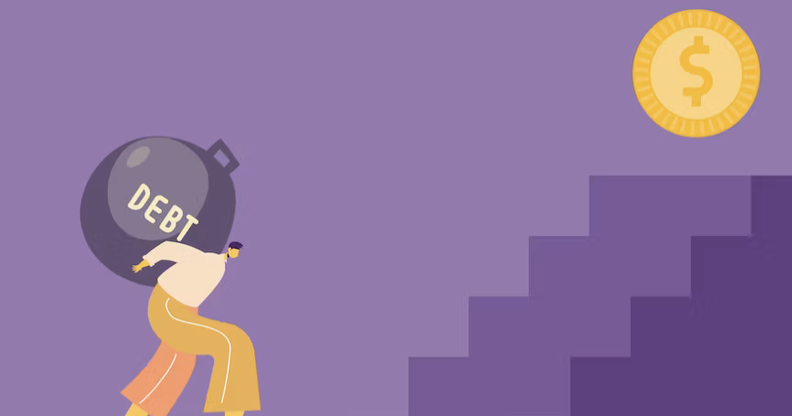
This is one of those topics where I feel strongly because I've lived it
Looking back now, it's almost embarrassing to admit, but I think it's important because I know I'm not the only physician who has been there.
Throughout medical school and residency, I carried tens of thousands of dollars in credit card debt. At the time, I honestly didn't think much about it. I knew I owed money, but I didn't really understand what was happening behind the scenes. I certainly didn't appreciate that interest was accumulating every single day or just how high those interest rates actually were. Embarrassingly, I even called them to dispute an interest charge as a fraudulent charge. Like many trainees, I was simply trying to survive financially until I became an attending.
Once my wife and I really began learning about personal finance, that changed almost overnight. We realized that this wasn't just another bill to pay someday. It was a financial emergency. Before we even built a full emergency fund, we directed our money toward eliminating that credit card debt because the guaranteed return from avoiding those interest charges was impossible to ignore.
The day we paid it off was one of the most freeing moments in our financial journey. It felt great, and it proved we could put a basic personal finance principle into practice. Since then, we've made it a rule that our credit card balance returns to zero at the end of every month. We still use credit cards for convenience, but never as a source of financing.
That experience fundamentally changed how I think about consumer debt.

- I’m sitting down with Rob Anderson, founder of Carlton Lane Capital and a former real estate developer, for a live Q&A about evaluating private investments.
- What makes a deal worth a closer look, and what usually goes wrong when investors get burned?
- How do debt, equity, and the terms of a deal change the risk behind a projected return?
- When is a tax benefit a genuine advantage, and when is it distracting from a weak investment?
What is consumer debt?
Not all debt is created equal.
When I talk about consumer debt, I'm referring to high-interest debt used to purchase things that are consumed rather than assets that generate future value.
The classic example is credit card debt.
Using a credit card to buy groceries, furniture, vacations, electronics, clothing, or dinners out is not inherently a problem. I still use credit cards myself. The issue begins when those purchases aren't paid off in full every month.
At that point, you're no longer using a payment method. You're borrowing money to buy things you can't currently afford.
That distinction matters because student loans and mortgages, while still debt, generally serve a different purpose. Student loans finance an education that increases future earning potential. A mortgage finances shelter and, hopefully, an appreciating asset if purchased wisely (but remember, your personal home is still a liability!). Even those forms of debt deserve careful management, but they are fundamentally different from revolving credit card debt carrying interest rates that often exceed 20%.
Those interest rates are what make consumer debt so dangerous.
Why I consider consumer debt a financial emergency
One of the biggest mindset shifts I ever made was realizing that consumer debt deserves the same urgency as any other emergency.
If you woke up and discovered a pipe burst in your home, you wouldn't casually wait six months to address it. You would fix it immediately because every day you wait makes the damage worse.
Consumer debt works exactly the same way.
Every month that balance sits there, interest compounds against you. Instead of your money working for you, your debt is working against you.
We've talked before about the incredible power of compound interest. It is one of the greatest wealth-building tools ever created. Unfortunately, compound interest doesn't care whether it's building wealth or destroying it. When you're paying 22% or 28% interest on a credit card balance, you're allowing compound interest to accelerate someone else's wealth instead of your own.
That's why I consider consumer debt an emergency.
In fact, if I had an emergency fund and suddenly found myself carrying high-interest credit card debt again, I would almost certainly use that emergency fund to eliminate it. The guaranteed return from avoiding 20% plus interest is simply too valuable to ignore.
Why doctors are especially vulnerable
This may surprise people outside medicine, but physicians are not immune to consumer debt. If anything, I think we're uniquely vulnerable.
The reason starts early.
Doctors spend years delaying gratification. We postpone earning meaningful income throughout college, medical school, residency, and fellowship while watching friends begin careers, buy homes, travel, and build wealth. Then one day the attending paycheck finally arrives.
After years of sacrifice, it becomes incredibly tempting to believe we've earned the right to finally enjoy ourselves. Honestly, we have. The problem is when lifestyle expansion outpaces financial planning.
A larger home. A luxury vehicle. Expensive vacations. Designer furniture. Private schools. Country clubs. None of these things are inherently wrong. I spend intentionally on things that matter to my family too. The issue is financing that lifestyle with debt before you've actually built the wealth to support it.
That's where physicians often fall into what I call the high-income trap. An enormous salary creates the illusion that any monthly payment is affordable. The monthly payment may be affordable. The long-term wealth destruction often isn't.
Society has normalized debt
Part of the challenge is that debt has become almost invisible.
Every advertisement focuses on the monthly payment instead of the purchase price. Car dealerships ask what payment you're comfortable with. Retailers offer financing at checkout. Online stores let you “buy now, pay later.” Credit card companies celebrate reward points while quietly hoping you carry a balance. For doctors, it's even more normalized as student loans are an assumed necessity for just about every prospective doctor. We've carried debt for so long, we become numb to it and think it's normal to carry six figures in debt.
Everything is designed to make borrowing feel normal, at least in the US.
The financial industry isn't built around helping you become debt-free. It's built around keeping you borrowing.
That's why it's so important to recognize these incentives for what they are. Every dollar spent on interest is a dollar that can't be invested, saved, donated, or used to create financial freedom.
“Shouldn't I just invest instead?”
One of the most common questions I receive is whether it's smarter to invest rather than aggressively paying down debt, even high-interest debt.
As I discuss in Should You Invest or Pay Off Debt First?, the answer depends largely on the interest rate. Likewise, in Should Your Interest Rate Change Your Investing Strategy?, I explain why higher interest rates dramatically shift that calculation.
If your credit card is charging 24% interest, paying that balance off provides something incredibly rare in investing: a guaranteed return.
The stock market has historically averaged around 10% annually over long periods. Paying off a 24% credit card balance is essentially earning a risk-free 24% return.
Those opportunities simply don't exist elsewhere.
That's why high-interest consumer debt should almost always move to the top of your financial priority list.
- I’m sitting down with Rob Anderson, founder of Carlton Lane Capital and a former real estate developer, for a live Q&A about evaluating private investments.
- What makes a deal worth a closer look, and what usually goes wrong when investors get burned?
- How do debt, equity, and the terms of a deal change the risk behind a projected return?
- When is a tax benefit a genuine advantage, and when is it distracting from a weak investment?
The emotional side of consumer debt
One thing we don't talk about enough is the psychological burden.
Debt creates stress. It creates guilt. It creates anxiety every time the statement arrives.
I remember feeling an enormous sense of relief after paying off those credit cards. It wasn't just about the math anymore. It was about finally feeling like I wasn't digging myself deeper every month.
That peace of mind is hard to quantify, but it's real.
How to break the cycle
The good news is that escaping consumer debt doesn't require a complicated strategy. And doctors with a high income certainly have the ability to eliminate this financial emergency when the right strategy is applied.
Stop creating new debt
This has to happen first. You cannot dig out of a hole while continuing to dig deeper.
For many people, this means temporarily putting credit cards away until spending habits are under control. I've written an entire post explaining Why I Hate Credit Cards. Despite the title, I don't actually think credit cards are inherently evil. They're simply incredibly dangerous if they become a borrowing tool instead of a payment tool. Know yourself and build a system that protects you.
Build a written budget
Every dollar needs a job.
A written budget isn't restrictive. It's empowering because it tells your money where to go before it disappears. Without one, debt repayment usually becomes whatever money happens to be left over. Unfortunately, there often isn't much left over.
You can find a simple budget template here.
Attack the highest-interest balances
Mathematically, paying off your highest-interest debt first saves the most money.
Some people prefer the psychological momentum of paying off the smallest balance first. That's perfectly reasonable if it helps you stay consistent.
The best debt payoff strategy is the one you'll actually follow.
Increase your financial margin
There are only two levers available.
Spend less and earn more.
For physicians, increasing income through moonlighting, expert witness work, consulting, or other side opportunities can accelerate debt payoff dramatically. The important part is directing those extra dollars toward debt rather than allowing lifestyle inflation to absorb them.
Stay debt free afterward
The goal isn't just paying off debt.
The goal is changing your relationship with debt.
That means building an emergency fund once the high-interest debt is gone, living below your means, and creating enough financial margin that unexpected expenses don't end up back on a credit card.
The goal isn't to eliminate every debt
I want to be clear that I'm not arguing every form of debt should disappear immediately (even though I strongly believe any bad debt should eventually disappear).
In fact, I've written previously about whether doctors should die with debt because thoughtfully managed low-interest debt can have a place within a long-term financial plan.
Consumer debt is different. Consumer debt doesn't build wealth. It delays and erodes it.
Financial freedom starts here
People often ask me what single financial change creates the biggest improvement. They're usually expecting some sophisticated investing strategy or tax optimization.
The reality is much simpler. Eliminate high-interest consumer debt. Build a positive monthly margin. Invest consistently in a core of broadly diversified, low-cost index funds. Repeat for years. None of those steps are exciting, but they work.
Financial freedom isn't built by finding the perfect investment. It's built by avoiding the financial mistakes that quietly compound against you for decades.
I know because I made those mistakes myself. Thankfully, I also learned that you can recover from those mistakes.
The tens of thousands of dollars of credit card debt I carried through training didn't define my financial future. Paying it off became one of the first major wins in our financial journey, and it reinforced a lesson that still shapes every financial decision I make today.
Consumer debt is a financial emergency. Treat it like one, eliminate it with urgency, and then let compound interest finally start working for you instead of against you.
What do you think? Is consumer debt a true financial emergency? How do you manage your consumer debt like credit card debt? Has your relationship with debt changed over time? Let me know what you think in the comments below!