One of the biggest mistakes I made early in my financial journey was assuming that investing was mostly about finding the highest return.
I think a lot of doctors fall into this trap. We become attendings, the income finally arrives, and then we start hearing about all sorts of opportunities. A real estate syndication. A private fund. Oil and gas. A medical office building. A “can’t miss” deal that another doctor is already investing in.
And the first thing most of us look at is the return.
What is the projected IRR? What is the multiple? What is the cash-on-cash return?
Those questions matter. But they are not the first questions we should ask.
The first question should be: What risk am I actually taking?

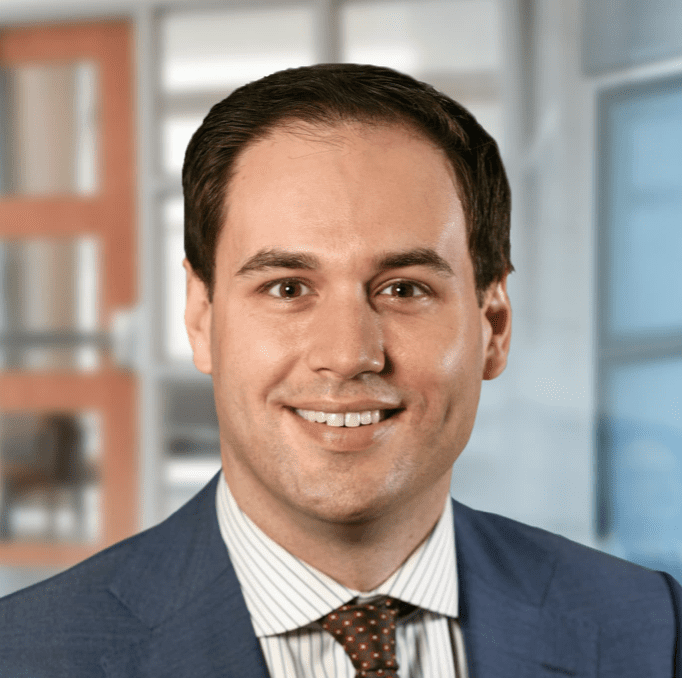
- I’ve known Carlton Lane founder Rob Anderson for years, which is why I was excited to introduce his team to the PPS community.
- In our recent webinar, Rob shared how physicians can think about real assets like medical real estate, housing, energy, infrastructure, and other essential-use assets.
- Their Big Sky Medical Fund focuses on long-term net leased medical office buildings in select southern markets, with the first four acquisitions in Texas.
- This is not investment advice. Private real estate involves risk, including illiquidity and possible loss of principal. Target returns are not guaranteed. Review the full PPM and consult your own advisors.
So I asked Rob Anderson from Carlton Lane Capital to help me think through a practical framework for recession-resistant investing for physicians. Not because any investment is truly recession-proof. I do not like that phrase because it can make us let our guard down.
But certain assets do tend to hold up better than others when inflation rises, interest rates stay higher, markets get volatile, or the economy slows. And for doctors, that matters.
Why this environment feels so confusing
The current investing environment is hard to read because different parts of the economy are telling different stories.
At the time we were putting this together, oil prices had risen meaningfully. The 10-year Treasury yield was above 4%. CPI was up 3.8% year over year through April, while PPI was up 6.4%. Meanwhile, the S&P 500’s price-to-earnings ratio was over 31, compared with a historical average closer to 20.
Stocks can look strong while inflation remains sticky. Commercial real estate can be repricing while technology stocks are booming. Gold and silver can rise while other assets struggle. Oil and gas can move for reasons that have nothing to do with your index funds. And interest rates can affect almost anything that uses debt.
So where are we in the economic cycle?
The honest answer is that no one knows exactly.
That is why I do not think physicians should build portfolios that require perfect prediction. A better approach is to ask which assets may be more durable across different economic environments.
The framework: what makes an asset more resilient?
Before getting into examples, we need a framework. Otherwise, we just end up listing asset classes without understanding why they may or may not work.
A recession-resistant investment usually has some combination of five characteristics.
First, it is tied to an essential need. People still need housing, food, health care, energy, and basic infrastructure even when the economy slows.
Second, it has pricing power. If inflation rises, can the income from the asset rise too? Can rents reset? Can contracts adjust?
Third, it is backed by a hard asset. This does not eliminate risk, but it does mean there is something real underneath the investment.
Fourth, there is limited supply or a barrier to entry. If anyone can build more of the same asset tomorrow, future competition may weaken returns.
And fifth, it has low obsolescence risk. The asset is not likely to become irrelevant because technology changes, consumer behavior shifts, or the business model breaks.
That is the spine of this discussion: essential need, pricing power, hard-asset backing, limited supply, and low obsolescence risk.
So now, instead of asking, “Is housing good?” or “Is medical real estate good?” or “Is energy good?” we can ask a better question: How well does this asset match the recession-resistant framework?
- I’ve known Carlton Lane founder Rob Anderson for years, which is why I was excited to introduce his team to the PPS community.
- In our recent webinar, Rob shared how physicians can think about real assets like medical real estate, housing, energy, infrastructure, and other essential-use assets.
- Their Big Sky Medical Fund focuses on long-term net leased medical office buildings in select southern markets, with the first four acquisitions in Texas.
- This is not investment advice. Private real estate involves risk, including illiquidity and possible loss of principal. Target returns are not guaranteed. Review the full PPM and consult your own advisors.
Applying the framework
Housing is probably the most obvious example because everyone needs a place to live. But that does not automatically make every housing investment attractive.
This is where doctors can get into trouble. We hear “multifamily” or “housing” and assume the investment is safe because the need is obvious. But real estate is local. A multifamily deal in a market with strong population growth and limited new supply is very different from a deal in a market where thousands of new units are being delivered at the same time.
It is not enough to look at occupancy alone. A property can be 93% occupied and still be struggling if the owner had to offer major concessions to get tenants in the door. Two months of free rent may help the occupancy number look better, but it hurts net operating income.
So housing fits the framework because people need shelter. But we still need to ask whether supply is limited, rents are actually growing, concessions are increasing, and the debt structure can survive a higher-rate environment.
Medical real estate fits the framework in a different way. As doctors, we understand this intuitively. People do not stop needing care because the economy slows. If a patient is sick, hurt, or in pain, that need does not disappear because the stock market is down.
There is also the continued shift toward outpatient care. More procedures and services are now being performed in medical office buildings, ambulatory surgery centers, and outpatient facilities.
Then there is tenant stickiness. A physician practice does not move locations casually. Moving can disrupt patient flow, referral patterns, staff routines, equipment, buildout, and local awareness. That makes a well-located medical office building potentially more durable than other types of commercial real estate.
Energy fits the framework from another angle. The world needs energy in good economies and bad ones. Energy can also be sensitive to inflation. When inflation rises, energy prices often rise too. That can make certain energy investments useful as an inflation hedge.
Infrastructure, necessity-based assets, and certain industrial properties follow the same logic. The question is: What do people and businesses keep using even when the economy slows?
Power, water, pipelines, rail, food distribution, gas stations, essential retail, medical services, and local logistics all support daily life. That does not make every investment in these areas good. But it explains why investors may look there when they want more durable demand.
Recession resistant does not mean risk free
Recession-resistant investing is not risk-free investing.
An asset can be tied to an essential need and still lose money. It can be backed by real estate and still be overleveraged. It can have tax benefits and still be a poor investment.
That is why we need to ask better questions.
What is the true demand driver? How much debt is being used? Is the debt fixed or floating? What assumptions are being made about rent growth, exit pricing, inflation, and interest rates? What happens if the economy weakens? What happens if the operator is wrong?
Those questions are how we protect ourselves.
The takeaway for physicians
The goal of recession-resistant investing is not to predict the next recession perfectly.
The goal is to build a portfolio that can survive multiple futures.
We do not need to chase every hot deal. And we definitely do not need to assume that a high projected return means an investment is worth the risk.
Instead, we need a framework.
Start with the five questions. Is the asset tied to an essential need? Does it have pricing power? Is it backed by something real? Is supply limited? Is obsolescence risk low?
Then, if the asset class makes sense, dig into the actual deal.
Because recession resistance is not a marketing phrase. It is a set of characteristics that we can study and apply.
What do you think? Do you consider recession resistance when building your portfolio? Let me know in the comments below!
- I’ve known Carlton Lane founder Rob Anderson for years, which is why I was excited to introduce his team to the PPS community.
- In our recent webinar, Rob shared how physicians can think about real assets like medical real estate, housing, energy, infrastructure, and other essential-use assets.
- Their Big Sky Medical Fund focuses on long-term net leased medical office buildings in select southern markets, with the first four acquisitions in Texas.
- This is not investment advice. Private real estate involves risk, including illiquidity and possible loss of principal. Target returns are not guaranteed. Review the full PPM and consult your own advisors.