As a physician investor, I got into real estate because I wanted more than another job. I wanted cash flow, tax advantages, equity build-up, and a path to financial freedom that did not depend entirely on clinical income. And together, Selenid and I have found that through long-term rentals. Selenid and I own and self manage 8 long term rental properties in Buffalo, NY. Their cash flow brings in about $10,000+ monthly and the other benefits including appreciation, tax advantages, and equity build up have been massive. As a result, our overarching real estate strategy has been to buy and hold small, multifamily properties in the Buffalo area that have cash on cash return of at least 10%. But in 2025, we broke from this long term real estate mold and bought our first short term rental property in a local ski town about an hour away from Buffalo.
After buying our first short-term rental in a local ski town about an hour from Buffalo, we came away with a clear conclusion: we much prefer long-term rentals. The higher-income potential of short-term rentals is real. But so are the operational headaches, revenue volatility, and day-to-day demands.
This definitely goes against the grain of what you may hear from most of the real estate investing world. And while some of that is genuine, some is also hype. So, let's explore what my experience has been like so that it may help inform your own successful real estate investing journey!
The allure of short term rentals
There are a lot of reasons that short term rental (STR) properties seem so appealing to prospective physician investors, including:
- Higher potential cash flow given higher nightly rental rates compared to long term rentals where rents are monthly
- Flexibility of use meaning that you could use the property as well potentially
- Lower barriers to access significant tax advantages
All of these played a role in why we pivoted to buy a short term rental after so much success with long term rental properties. There was an element of curiosity, the benefit of diversification of our real estate portfolio, and a chance to test this model firsthand with relatively little to lose – if it didn't work as an investment property, we bought in a local ski town where we could always use the property ourselves in the future.
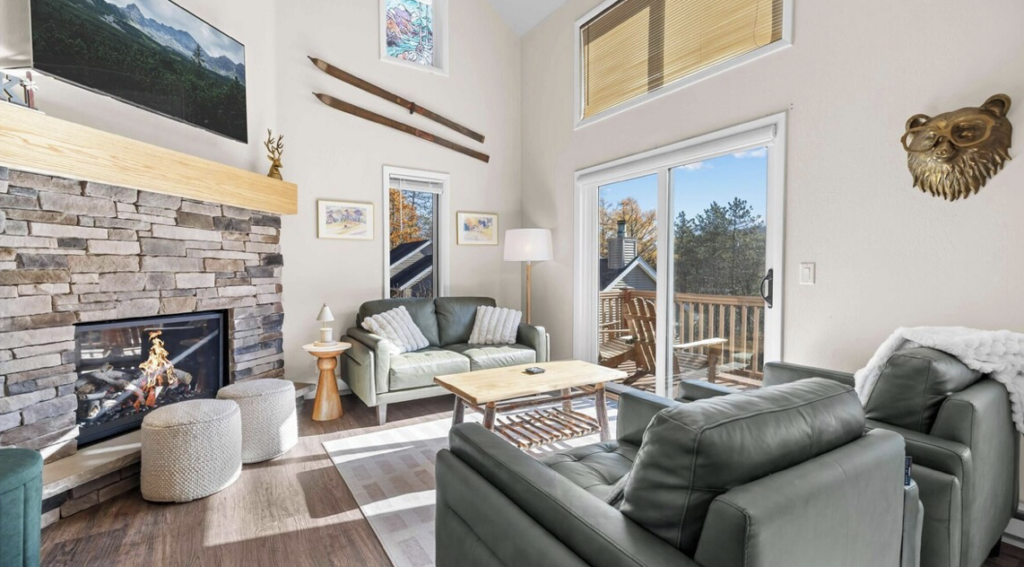
While not the primary consideration in our case, the tax benefits seem to be what draw in most physician investors. The short term rental tax loophole only requires that investors put in 150 material participation hours into a STR annually to deduct expenses and depreciation from active income, like W2 income. This is a much lower bar than the requirements for long term rentals (LTRs) to reach Real Estate Professional Status, so many doctors have flocked to STRs. However, I have been staunch that doctors, or anyone, should not buy real estate solely for the tax advantages. Unfortunately, this is exactly what seems to happen many times. And the factors I am going to discuss below subsequently mitigate those benefits for the investor.
6 challenges of short term rental investing that reinforced our preference for long term real estate
This is not to say that STR strategies can never work. They can. But these are the reasons that our experience has led us back to long term real estate investing:
1. The reality of higher purchase prices
Short term rental properties are largely located in places that people want to visit for a short period of time, i.e. vacations. Since there is high tourist demand along with generally walkable and scenic locations, these markets tend to demand premium property prices.
And while you still need to make sure that the numbers work and the potential property cash flows, occupancy with STRs can be much more seasonal and fickle. Plus, cities and towns can always change their regulations around short term rentals, banning them, increasing cost of registration, or placing severe restrictions on them. This all spells higher risk for the investor, especially as entry price increases.
Compare that with long term rentals which can be found in less competitive markets. People everywhere need a place to live and there is a severe housing shortage in the US currently. Plus, the market is a bit less efficient and it is generally easier to find properties below replacement value, even in today's market.
2. Turnover Is constant (and time consuming)
With LTRs, turnover ideally happens once a year if that. Many times it is every few years if you have good tenants, which is certainly important. But with STRs, by definition, turnover is at least every 1 month and usually multiple times a week.
This means a few things. It means frequent:
- Cleaning coordination
- Linen and supply management
- Guest messaging
- Handling check-ins and check-outs
This not only means more time on your part, even with a good management system, but higher cost of maintenance. And keep in mind that to take advantage of the tax benefits, you need to be the one putting the most hours into the property, it can't be a property manager or cleaner who spends more time on it than you.
There is no such thing as truly passive income. But when it comes to real estate, long term properties are much more passive than short term properties from my perspective.
3. Guest quality is much more variable
With long term rentals, you get one type of tenant – those looking for a place to call home. Now there is variability in the quality of long term tenants that you will get. And vetting for good ones is so important, that's why Selenid and I always handle that aspect personally.
But the guest experience you get with short term rentals is even more variable. People looking for short term rentals can be families, last minute travelers, weekend party groups, and vacationers. And their behavior and care for your property vary widely. But whoever they are, they do not look at your place as their home, they see it as a hotel room.
We experienced great guests. But we also experienced guests where there were noise issues, extra cleaning necessary, and unexpected wear and tear. Leaving wet towels on carpet, finding linens thrown around and stained. It's disheartening but also takes more of your time and money to deal with.
It is possible to try and safeguard against some guests by requiring an older age to stay at your place. But most platforms will encourage instant booking so even the strictest properties have very little control over who their guests are, as the penalty for cancelling on a guest is severe.
4. Platform fees add up quickly
If you have a STR, you really need a platform to promote your place and get potential guests' eyes on it. Yes you can DIY it, creating your own website and advertising on social media, but that will only get you so far.
The problem here is that these platforms know that you need them. And they charge a fee for everything: host fees, cleaning fees, payment processing fees, booking fees. It's not even clear to me what all these fees cover.
So there is a huge difference between your gross revenue and your net revenue just as a result of these fees. Then you add in insurance costs, taxes, mortgage, etc. Your cash flow can get cut into quickly.
Compare this to LTRs which I manage using an online platform that costs just $79 monthly to manage 18 units. The transactional costs are much, much lower
5. Maintenance is entirely your responsibility
With long term rentals, your tenants maintain the property (even if not completely up to your standards). My tenants take care of the lawn, shovel snow, and keep the property is generally good shape. With most of our properties, we rarely hear from the tenant.
With short term rentals, that responsbility is completely yours as the owner. Guests do not handle even the most minor of issues themselves.
Every small issue becomes a host problem:
- Light bulbs
- WiFi issues
- Appliance questions
- Remote controls, etc.
Plus, short term properties are expected to come fully finished and equipped. So you need all furniture, linens, kitchen supplies, decor. This leads to more items that can wear and tear and that you have to maintain or replace at your cost.
Compared with LTRs, STRs have a much higher operational friction.
6. Revenue and vacancy volatility
If somebody needs a place to live, they need a place to live in all seasons, regardless of the economy. And just about every city, town, and village in the world has people looking to live there for different reasons. But people are only looking to vacation in certain places, in certain seasons, given certain economic conditions.
This means that your rental income is much more variable with short term rentals. Economic depression? Less people are going on vacation. Rental in a ski town like ours? Less business in summer. Not near a beach? Less people looking to visit your market.
Of course you should put all of these factors into consideration when you pick and market and buy a property, but even then so much remains out of your control. I know STRs in great markets that have gone unrented or under-rented for long periods of time.
The income from LTRs is more reliable, predictable, and steady.
STRs Are a Business, LTRs Are an Investment
This has been my realization.
Short term rental properties place you square in the middle of the hospitality business. And this entails managing things like customer experience, customer service, short cycle revenue management, and increased operational complexity. Most doctors I hear from want their real estate investments to be as passive as possible. STRs are not that.
Long term real estate investing is more predictable and more stable with good systems in place from my experience. And hopefully I've been clearly able to describe why in this post.
I still am glad that Selenid and I undertook this experiment. It gave us real-world perspective, operational insight, and a deeper understanding of both strategies.
But we came away from the experience only more reinforced that long-term rentals remain the backbone of our real estate investing strategy. And that's the cool thing about investing: Sometimes the best way to understand your investing philosophy is to test alternatives firsthand.
A final CYA
There are likely to be some physician investors who have used STRs to great effect. And that is awesome! I am not saying that it cannot be done. If you enjoy hospitality, want really active day-to-day involvement, and can find a great market, short term rental strategies may work much better for you than they did for us.
However, they just did not align with what Selenid and I are looking for in our real estate investments. And from most of the doctors that I talk to, the goal is for more passive income, not more active involvement. And I do strongly believe that STRs fall on the most active end of the real estate investing spectrum. So buyer beware…because there is a lot of hype out there.
My best recommendation is to become crystal clear on what your goals are and what your why is for getting into real estate investing as a doctor and aligning your strategy as closely as possible to those goals.
These resources can assist you in learning more about options for real estate investing for doctors and help you gain clarity of your investing goals:
- A Real Estate Investing Guide for Physicians
- Real Estate Investing: Why the Tortoise Beats the Hare
- How To Actually Buy A Real Estate Investment Property
- How To Create Your Financial Goals and Priorities
What do you think? Do you invest in real estate? Have you primarily focused on long term or short term properties? What has your experience been? Which do you prefer? Let me know in the comments below!