As physicians, we spend years developing very specialized skills. We learn how to take care of patients, build clinical judgment, make decisions under pressure, and carry responsibility when things do not go according to plan.
But most of us do not spend years learning how private investments are structured.
And that matters because, as income rises, many doctors eventually start hearing about alternative investments. Real estate syndications. Private equity funds. Private credit. Venture funds. Energy deals. Business acquisitions. The names and strategies can vary, but many of these opportunities are built around the same basic structure.
There is a general partner. And there are limited partners.
At first, this may sound like legal jargon. But it is actually one of the most important ideas to understand before investing in private deals. Because once you understand whether you are a general partner or a limited partner, you begin to understand what you are really responsible for, what you control, what you do not control, and where the risks really live.
So let’s break it down.
The Basic Structure: General Partners and Limited Partners
Most private investment opportunities are structured around two primary groups:
- General Partners (GPs)
- Limited Partners (LPs)
The relationship between these two groups forms the backbone of many private investments.
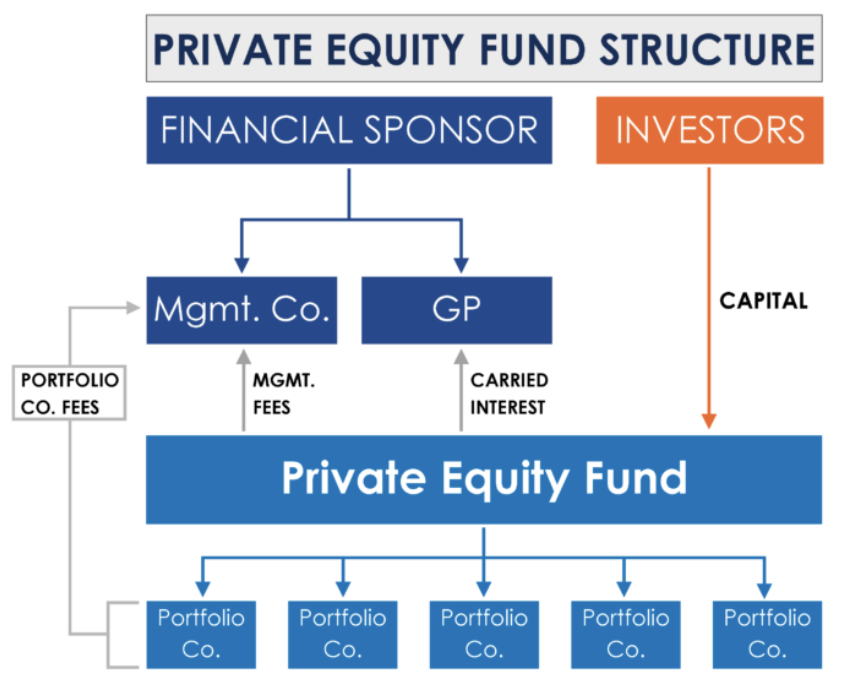
The general partner is responsible for finding, evaluating, acquiring, managing, and eventually exiting the investment. They are actively involved in the day-to-day operations and decision-making.
The limited partners provide capital to the investment but are not actively involved in running it.
In simple terms: GPs contribute expertise and management. LPs contribute capital.
This structure allows physicians and other busy professionals to access investment opportunities without having to personally manage properties, businesses, or investment portfolios.
What Does a General Partner Actually Do?
Think of the GP as the operator.
As an example, in a real estate syndication, the general partner may be responsible for:
- Finding the property
- Negotiating the purchase
- Securing financing
- Managing renovations
- Overseeing property management
- Executing the business plan
- Selling or refinancing the property
In a private equity fund, the GP may:
- Source acquisition opportunities
- Conduct due diligence
- Structure transactions
- Improve business operations
- Manage portfolio companies
- Execute eventual exits
The GP is actively working on behalf of investors.
Because they are taking on this responsibility, they often receive compensation through management fees, acquisition fees, profit-sharing arrangements, or carried interest. Plus they benefit from any money they invest in the deal themselves (which is something that you need to look for as an LP; a deal where the GP is not investing in it is a major red flag).
This is one reason why returns are often structured differently between GPs and LPs. The GP is contributing both labor and expertise in addition to capital.
What Does a Limited Partner Do?
The limited partner's primary responsibility is providing capital.
As an LP, you are not expected to manage the investment, make daily decisions, hire employees, negotiate contracts, or oversee operations.
Instead, your role typically involves:
- Evaluating the opportunity
- Performing due diligence
- Committing capital
- Monitoring investment performance
- Receiving distributions and reports
After investing, most of the operational responsibility shifts to the general partner.
For many physicians, this is precisely the appeal.
Our careers are already demanding. Despite the benefits of direct real estate and business ownership that drew me in, many of us often don't have the time or desire to become full-time real estate operators or business managers. Being an LP allows us to participate in potentially attractive investments without adding another major responsibility to our lives.
Why Due Diligence Matters So Much
One mistake I see many newer investors make is focusing almost exclusively on the investment itself. They spend hours analyzing projected returns, cash flow estimates, and market trends. And those things matter.
But when you're investing as a limited partner, one of the most important factors is actually the quality of the general partner. Remember, once you invest, you're placing a significant amount of trust in the GP's ability to execute. You are essentially saying: “I believe this team can successfully manage my money.”
That's why evaluating the sponsor or operator is often even more important than evaluating the investment itself.
Questions worth asking include:
- What is their track record?
- How many deals have they completed?
- How did previous investments perform?
- How do they communicate with investors?
- How do they handle challenges?
- How much of their own money is invested alongside yours?
A mediocre deal with an exceptional operator may outperform a great deal with poor management. As LPs, your success is heavily tied to the people running the investment.
Limited Partners Have Limited Control
The word “limited” doesn't just refer to liability. It also reflects limited control. In most private investment structures, LPs have very little influence over daily decisions.
You typically cannot:
- Approve operational decisions
- Direct investment strategy
- Hire or fire managers
- Control distributions
- Determine exit timing
Some investments provide limited voting rights for major decisions, but these are usually reserved for extraordinary circumstances.
This lack of control can feel uncomfortable, especially for physicians who are accustomed to making important decisions in their professional lives.
However, it's also what makes these investments scalable. If every investor had equal decision-making authority, many investment opportunities would become impossible to manage effectively.
Public Investing Works Similarly (With One Important Catch)
Many investors think of LP structures as something unique to private equity or real estate syndications.
In reality, the concept exists throughout investing. When you buy stock in a publicly traded company, you're essentially functioning in a similar role. You contribute capital. The company's executives and leadership team make operational decisions. That's what happened if you just invested in SpaceX after its IPO.
You may have limited voting rights, but you are not directing daily activities. Private investments just tend to formalize the GP-LP relationship more explicitly. Once you recognize this parallel, private investment structures often feel much less intimidating.
However there is one major difference
With public investments, you can diversify your investments among hundreds and hundreds of companies with a small investment in each. This is exactly what index funds do.
But a private equity investment usually has a much higher investment minimum (think at least $50-100k) that limits the ability of most physician investors to diversify beyond a few such investments.
Is Income from an LP Investment Passive?
For most physician investors, the answer is yes. Income generated from a limited partnership is generally considered passive income.
Why?
Because you're not materially participating in the operation of the investment. The GP is doing the work. You are providing capital. This distinction matters because passive income and passive losses are often treated differently for tax purposes than active income.
Generally speaking:
- Passive losses can offset passive gains.
- Passive losses usually cannot offset active physician income.
- Passive income is often taxed differently depending on the investment structure.
The exact tax treatment varies based on the investment, your overall financial situation, and current tax law.
That's why it's important to work with a qualified CPA when evaluating significant alternative investments.
Is Passive Income Truly Passive?
This is where I push back a little bit on the common terminology. We often hear people talk about “passive income” as though money magically appears without effort. In reality, successful passive investing still requires work.
The difference is that the work occurs at a different stage.
Instead of spending hundreds of hours managing a property or operating a business, the LP investor spends time:
- Learning
- Researching
- Vetting sponsors
- Reviewing documents
- Understanding risks
- Monitoring performance
The effort is concentrated upfront. Once the investment is made, ongoing involvement is generally limited. That doesn't mean the investment is completely hands-off. It simply means the time commitment is dramatically lower than actively running the investment yourself.
Could a Physician Become a General Partner?
Absolutely.
Some physicians eventually transition into more active investing roles.
You might:
- Develop real estate projects
- Operate a private equity fund
- Manage syndications
- Acquire businesses
- Run investment partnerships
In those situations, you would move from being primarily a limited partner to serving as a general partner. This shift creates greater control and potentially greater upside.
It also comes with greater responsibility, liability exposure, time commitments, and operational complexity.
For most physicians, however, remaining an LP is often the more practical choice because it allows investing to complement their medical career rather than compete with it.
The Bottom Line
Most physician investors will participate in a private equity investment as a limited partner.
And whatever that investment is, understanding the relationship between general partners and limited partners is essential. General partners run the investment. Limited partners provide capital.
As an LP, your job isn't to manage the investment. Your job is to evaluate the people who will.
That's why due diligence matters so much. The quality of the operator often determines the quality of the outcome.
When you understand your role, understand the sponsor, and understand the structure, you'll put yourself in a much stronger position to build wealth while maintaining focus on your clinical practice (or anything else)!
Here are some helpful resources to learn more about performing due diligence for a private equity investment:
- Figuring Out If You Are a Better Active or Passive Real Estate Investor
- What Doctors Should Know Before a Private Equity Sale
- Understanding the Capital Stack: How Physicians Can Diversify with Real Estate
- The Process of Investing in a Real Estate Syndication
- Mineral Rights: A Lucrative Investment Opportunity in Energy and Real Estate
What do you think? Have you invested in private equity? What kind of deal was it? How did it go or how is it going? Are you an LP or GP? Anything you would do differently? Let me know in the comments below!