Making sure that you are tax optimizing your investment accounts at all stages of your career is imperative. However, it becomes perhaps most important as you reach retirement, whatever age that ends up being. Because you will then actually be living on your retirement withdrawals. And how those withdrawals are taxed will impact how much of your hard-earned and saved money you get to keep. That makes this one of the most high-yield personal finance topics that you can learn throughout your investing career. And Roth conversions play a big role in this.
So let's take some time to examine Roth conversions and when they can make sense for physicians!
• Most side gigs take time to build. This one pays fast.
• I do short, physician-only surveys on Sermo between cases and get paid for my input.
• They take just a few minutes and the money hits PayPal or gift cards right away.
• It’s not replacing my OR income, but it covers the little things that have a big impact—gifts, kids' activities, or the next date night.
What is a Roth conversion?
Let's start with the basics.
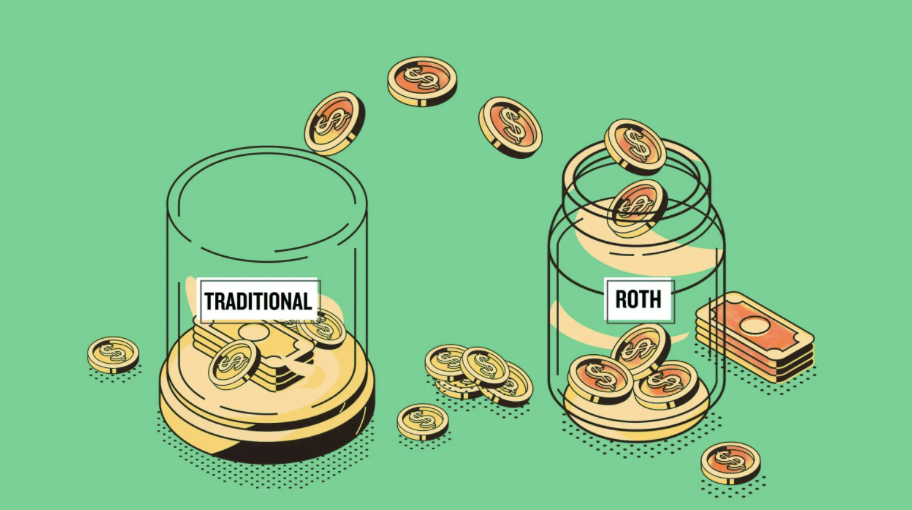
And the first step is understanding what “Roth” even means. Basically, any investment account with the “Roth” prefix means that the money in that account is tax-free. These include Roth IRAs, Roth 401(k)s, etc. Meaning that the money in the account has been taxed already before contribution (as ordinary income via income taxes). But it will never be taxed again, even upon withdrawal.
This is in contrast to “traditional” tax-advantaged retirement accounts which don't have any prefix. These accounts include 401(k)s, IRAs, et. These account are “pre-tax.” This means the money in the account is not taxed up front. Instead, it is taxed on the back end upon withdrawal where it is taxed as ordinary income based on your tax bracket in our progressive tax system.
Ok, now onto the Roth conversions…
A Roth conversion is the process of moving money from a pre-tax retirement account, like a traditional IRA, 401(k), or 403(b), into a Roth account.
When you do this, the money that you convert (which were pre-tax dollars) now get treated as taxable income for the year of the conversion. Thus, the money you convert all of a sudden gets taxed right then. But it is never taxed again in the future. Those dollars are now Roth dollars. The money grows tax-free and can be withdrawn tax-free in retirement. This is of course provided the rules of the new account are met (like age 59½ and at least 5 years since the first Roth contribution or conversion for a Roth IRA).
An important distinction
There are 2 types of Roth conversions:
- An in-plan Roth conversion, and
- A Roth IRA conversion
An in-plan Roth conversion is when you convert pre-tax dollars in a traditional investment account, like a 401(k), into after-tax Roth dollars within the same plan. So basically you convert some or all of your 401(k) (or 403(b) or 457, etc) into a Roth 401(k). The amount converted is now after tax and all growth and future withdrawals are tax free. The only caveat here is that there are required minimum distributions (RMDs) for Roth 401(k)s and similar accounts that are not present in a Roth IRA. However, you can usually roll over the Roth 401(k) or similar account into a Roth IRA once you leave your employer.
A Roth IRA conversion when you take pre-tax money in a traditional like a 401(k) and roll it over to a Roth IRA (either when you leave an employer or if your employer plan allows it). Now, the converted pre-tax money is treated by the IRS as taxable income and taxed at your tax rate. But afterwards, it grows tax free and can be withdrawn tax free in the future, with no associated RMDs.
And note that, with either iteration of a Roth conversion, there is no limit on how much money can be converted.
And another quick side note…
This is all a bit different than the “mega backdoor Roth IRA.” With a mega backdoor Roth IRA what you are doing is contouring extra after-tax dollars to a pre-tax retirement account (if your employer plan allows). Then, you roll just those after-tax dollars into a Roth IRA with the ability to contribute a much greater amount than the $7,000 annual limit of the “regular” backdoor Roth IRA. In this scenario, the pre-tax dollars you contributed to the same retirement account are left alone in their traditional retirement account and remain pre-tax.
Confused yet??…let's simplify it!
- An in-plan Roth conversion is when you take pre-tax dollars in your current retirement account and make then after-tax dollars that grow tax-free within the same retirement account
- A Roth IRA conversion is when you take pre-tax dollars in your current retirement account and roll them over into a Roth IRA account, making them after-tax dollars that now grow tax free in a new location (the Roth IRA)
- A mega backdoor Roth IRA is when you contribute extra after-tax dollars to a traditional retirement account and then roll just those after-tax dollars into a Roth IRA
Last note here. Please take into account that an in-plan Roth conversion will still carry RMDs and Roth IRAs do not. Thus, after an in-plan conversion, you still have to take out certain amounts at age 75 by law. This is a disadvantage as a Roth IRA conversion or mega backdoor Roth conversion allows you to keep your money growing without ever being required to take it out (and thus kill its compound growth) by a certain time.
What are the benefits of Roth conversions for doctors?
Now that we understand what a Roth conversion is, we need to understand how it might help us.
Basically, making a Roth conversion makes sense when your current marginal tax rate is lower than your expected future rate. Because, if your tax rate is lower now than you expect it to be in the future, it makes sense to realize the taxes on your investments now compared to later. Then, in the future when your tax rates are higher, you can take the money out to fund your retirement without worrying about a tax hit.
So, what are some situations where this can make sense for physicians?
During training
- You will be in your lowest tax bracket ever during your years in training. If you have pre-tax money invested either from prior to or during this time, Roth conversions make a lot of sense.
Lower income years
- Let's say you take a sabbatical. Or have parental leave. Or anything else that causes you to take time off with a resultant decrease in income in 1 year. This is a good opportunity for a Roth conversion.
Years you plan to have large deductions/passive losses
- Whether these are due to significant charitable donations or large passive losses from tax loss harvesting or another investment loss, this presents a great opportunity for Roth conversions where your realized gains can be offset by the losses.
Retirement gap years
- Let's say you retire from clinical medicine at age 60. But RMDs don't need to be taken now until age 75. That is a gap of 15 years where your income will likely drop sharply as you solely withdraw enough from retirement accounts to cover expenses (and not more as RMDs would likely require). This is a prime opportunity to do Roth conversions, pay taxes at a lower tax bracket, and then have your investments grow tax free to be withdrawn tax free later on whenever you want and when RMDs in your other retirement accounts kick in.
- This also carries a second advantage as conversions realized prior to age 63-65 can limit surcharges on your Medicare premiums.
Before future taxes rise
- No one can predict the future. However, if taxes look likely to rise in the future due to policy change in Washington, that can be a good time to consider Roth conversions to realize taxes at a lower tax rate.
Before moving to a higher income tax state
- Let's say you live in Florida which has no state income tax. And you plan to move to New York (where there is a hefty state income tax). Could be a good time for some Roth conversions before moving!
Pitfall! Avoid the pro-rata rule
Anytime you make a Roth IRA conversion, you need to make sure that you don't have any pre-tax money in a traditional IRA, SEP IRA, or SIMPLE IRA. If you do, then those accounts will be taxed as soon as you perform the conversion. This is because the government doesn't want you cherry picking only after-tax dollars in your various retirement accounts (which is what you are doing here anyway…but they still require you to follow their rules.)
I avoid this by keeping things simple and just not having any open and active traditional/SEP/SIMPLE IRAs. Then I just don't have to worry about this.
Playing the tax smart investing game
In the end, there is never a free lunch.
Pre-tax investment accounts make sure you get taxed on the back end. Tax-free investment accounts make you take the tax hit on the front end. The government always wants their money.
But, as always, while you do have to pay your fair share in taxes, you don't need to leave a tip. And this is where tax smart investing comes in.
By using strategies like Roth conversions, you can make sure that you realize taxes on your investments when it will come at the lowest cost to you.
A quick case study
Let's say I take a sabbatical and have a low income year. I can make a Roth conversion to fill up to (but not go over) the 24% tax bracket that I currently am in due to lower income.
Now my investments can grow the rest of my life tax free and I don't need to worry about paying more when I withdraw them. Plus the taxes I pay now are less than I would in the future during higher income years when I would be in the 37% marginal tax bracket.
That's a win-win!
As next steps
- Determine your current tax brackets and project where you will be in the future
- Document how much money you have in your retirement portfolio that is pre-tax and post-tax
- Project your income as well as possible tax deductions looking into the future
- Start to think about potential good timing spots for Roth conversions
- Double check that your employer retirement plan allows for Roth conversions, either in-plan or to a Roth IRA
In the meantime, check out these great resources to further help you prepare for retirement:
- How Much Is Enough Retirement Savings?
- Should You Actually Increase Your Stock Allocation in Retirement?!
- How Much Do You Need to Save for a $5 Million Nest Egg?
- How Does Passive Income Figure Into Your Retirement Calculations?
You can also check out my best-selling book, Money Matters in Medicine!
What do you think? Could a Roth conversion help you invest in a more tax efficient manner? Does your plan allow Roth conversions? Let me know in the comments below!